EV Charging in Apartment Buildings in Austria and Germany
You own an apartment and are thinking about buying a wallbox to charge your electric car? That's great! In this article, we explain how to implement EV charging in apartment buildings and what you need to pay attention to. Please note, however, that the necessary approach depends a lot on where you live. In this article, we take a look at the regulations and steps in Germany and Austria.
Quick access to the content
EV Charger at Condo: Regulations and Steps in Germany
The Condominium Modernisation Act (WEMOG) regulates your right to install a wallbox in your car park or garage. The other members of the homeowners' association cannot reject this in principle. However, they can have a say in how the construction work is carried out.
Step 1: Choose wallbox installer
It is crucial that you first look for an installation company that already has experience in scaling and designing load management for electric vehicles. How do you find such a company?
Good points of contact are the professional associations for the electrical and IT professions, local grid operators, certified electric mobility consultants, and local specialist companies that specialise in charging infrastructure and energy management.
Step 2: Select wallbox and check installation location
Once you've found a suitable installation company, the next step is to choose the right charging solution. You’ll need to discuss your situation in detail with the installer and review everything on-site. The electrician will coordinate with the network operator to ensure the building's power supply is sufficient for both the apartments and the planned number of wallboxes. Depending on the setup, intelligent load management may be necessary, especially if multiple people are interested in installing wallboxes. Additionally, in Germany, a legally compliant, metered wallbox installation is required for shared use. You can find more details in the section “Billing of Charging Costs.”
If you live in an older building, you might face higher costs due to outdated electrical installations that may need upgrading. Another potential cost factor is the cable installation route; long or complex cable paths can be expensive. It's a good idea to get multiple solution ideas and cost estimates. Also, think ahead about how the system might be expanded in the future if other property owners later decide they want a wallbox. For example, go-e offers blank covers for their go-e Charger PRO wall mounts, allowing you to set up the electrical installations for all parking spaces initially. Additional wallboxes can then be added later, which might be the most cost-effective solution, especially if the electrical work is eligible for subsidies.
Step 3: Inform co-owners
Once everything is well planned, the next step is to inform your fellow co-owners about your project in writing, either by letter or email. You can also gauge their reactions beforehand by discussing it with them personally. You may find more interested people among them, or there could be concerns, such as about electricity costs. It's best to collect all these concerns and address them one by one in your letter. Your letter should include an outline of different wallbox installation options with their pros and cons, a brief project description and timeline, as well as a cost breakdown — even if you are covering the costs yourself.
Step 4: Submit an application
If there are multiple interested parties for the wallboxes, you can send the letter together to the co-owners' association. The response to the request will either come through a written vote or during the owners' meeting, which usually takes place once a year. To be included in the agenda, your request must be submitted at least 3 weeks before the meeting. You can confirm the deadline with the property management.
As mentioned earlier, the owners' meeting cannot reject your request outright, but everyone can discuss the details—specifically, how the project will be carried out. This is why it's important to outline different options with their pros and cons.
Step 5: Wallbox installation
Once the majority decision is made and the installation option is chosen, the installer can begin the work after notifying your network provider. Then comes the happy ending: you can charge your car at your very own wallbox!
By the way, since 2019, in Germany, it is mandatory to register a wallbox, whether it is stationary or mobile.
EV Charging in Apartment Buildings: Regulations and steps in Austria
With the 2022 amendment to the Austrian Residential Property Act (Wohnungseigentumsgesetz), it has become easier for apartment owners to install wallboxes in multi-family buildings, at least in a condominium (WEG).
The first question to address is whether the installation concerns a single unit for one owner or a shared facility that will be used by multiple owners in the building.
Individual solution: EV charger at condo for one owner
In the case of a single-unit solution, it is not surprising that the apartment owner who wants to install the chargepoint for condo is solely responsible for the costs. This owner is responsible for organising the installation through a licensed electrical specialist and will also need to take care of any necessary maintenance on their own.
Which chargepoint for condo?
A wallbox like the go-e Charger Gemini is sufficient in this case if the charging station draws power through the apartment's meter. MID compliance is required if the power supply is connected to the shared building supply.
Submit an application for individual solution
In the case of a single-user solution, unanimous consent from the other property owners is required. However, unlike in Germany, where a majority decision is sufficient, in Austria, all owners must give their written approval. You do not need to get each individual owner's signature, though. Instead, you must notify all owners in writing, and if no one objects within two months, their consent is assumed (the "assumed consent" rule).
A small but important detail is that the "assumed consent" rule only applies to so-called "slow charging." Currently, this refers to single-phase charging stations with a maximum of 3.7 kW at 16 amps or three-phase chargepoints for condo with up to 5.5 kW at 8 amps. For higher charging capacities, such as 11 or 22 kW, active consent from all property owners is still required.
Overall solution: EV charger at condo for several owners
It's simpler and more beneficial if you're aiming for a comprehensive solution, where the entire property's charging infrastructure is provided. In this case, the costs are shared by the homeowners' association. This approach is particularly sensible as it reduces long-term complexity and simplifies the power supply and load distribution. If you're not the only one interested in an EV charger at condo, you and other homeowners can also form an "E-Mobility Community."
Which wallbox is suitable for EV charging in apartment buildings?
If you're aiming for a comprehensive solution for the homeowners' association (WEG) with multiple owners needing Wallboxes, in Austria, you'll need MID-compliant Wallboxes, such as the go-e Charger PRO.
Submit an application for a complete solution
For a comprehensive solution, the homeowners' association (WEG) doesn't need unanimous approval. Typically, a majority vote is enough, provided all owners have been properly and legally notified in writing about the proposed changes. Alternatively, if two-thirds of the votes are in favour and these represent at least one-third of the total co-ownership shares, the proposal can pass.
Now to the letter you send to your co-owners. The proper written notification of the other co-owners must, in any case — whether it's an individual or group project — look like this:
-
You should clearly and understandably describe the planned project in your letter.
-
Additionally, mention the legal consequences if no objections are raised.
-
Provide all the technical details and costs. To prepare for this, you should have the electrical specialist inspect the site, plan different options, and obtain multiple offers in advance.
You should also inform the property management in advance. The two-month deadline for the approval fiction for slow EV charging in apartment buildings starts from the date your letter is delivered.
If a co-owner objects in writing within this period, the objection will be valid, and you'll have to go to the district court to request approval replacement. The court can then decide in a non-contentious procedure that the other owners must tolerate your charging station. If you're setting up a slow-charging station, the chances are good that the court will rule in your favour.
If you don't want to wait for two months, there's a second option: the next owners' meeting. Before that, make sure the project is included in the invitation as an agenda item. If all owners agree, you have the green light. Before installation, be sure to register the charging station with the network operator. Any charging station with a power output of more than 3.7 kW must be registered.
Billing the Charging Costs
Let's assume that the consent of the co-owners has been obtained: the wallbox is installed and charges the electric car. Now the question arises: How is the electricity consumed billed?
There are three common cases:
1. Wallbox at the apartment's electricity meter
First, the individual solution where the Wallbox is simply connected to the apartment's electricity meter. Since this meter is already calibrated, the Wallbox itself doesn't need to be. For example, you can use a go-e Charger Gemini 2.0 with a basic electricity meter. It's recommended to activate access protection using an RFID card to prevent others from using your electricity without permission.
The other two scenarios involve charging stations connected to the common electricity meter.
2. Wallbox at common electricity meter on private parking space with own wallbox
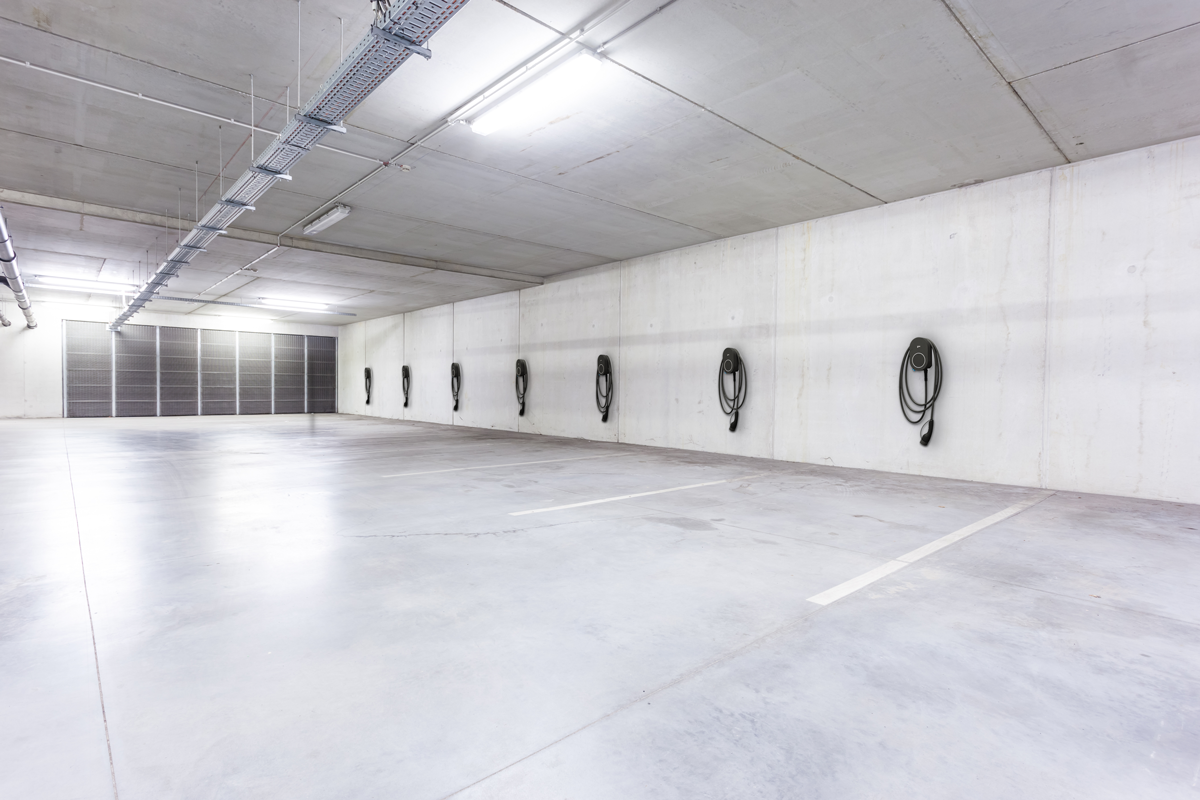
If each wallbox user has their own parking space with a fixed-installed wallbox, you will need a MID-compliant meter for each wallbox. For example, the go-e Charger PRO already includes this feature. This allows property management to bill the electricity charged correctly per apartment owner.
3. Wallbox at the general electricity meter in a communal car park with wallboxes
If there are parking spaces with e-charging stations in your residential complex, you can park and charge your electric vehicle there as a co-owner when needed. In Austria, a Wallbox with a MID-compliant meter is sufficient. However, in Germany, the wallbox must also comply with legal metering and calibration standards, like the go-e Charger PRO CABLE ME. The property management will handle the billing.
If the property management opts for manual billing, no special billing software is required with the go-e Charger PRO. The charging data can easily be accessed and downloaded via the free go-e backend through the browser. Alternatively, go-e Chargers can be integrated with automated billing software via open, standardised interfaces.
There are various solutions to choose from. For situations requiring reliable, accurate kWh readings and legal compliance for electricity billing, the go-e Charger PRO is the best option. Suppose the chargepoint for condo is connected to a separate external calibrated meter, like a residential meter. In that case, the go-e Charger Gemini is also suitable (though not for connections to the general electricity supply). Both the go-e Charger PRO and Gemini are “smart” wallboxes with static load management. For dynamic load management, the go-e Controller or other energy management systems can be used.
new
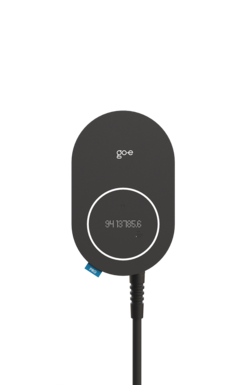
go-e Charger PRO CABLE
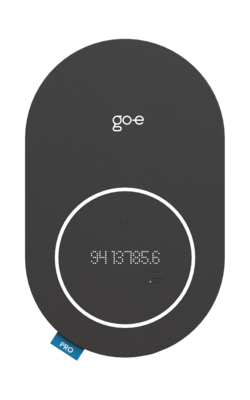
The go-e Charger PRO with integrated MID-compliant meter addresses the needs of companies, fleets, and company car drivers who charge at home or apartment buildings, among others. The stationary wallbox with all the smart features you would expect from go-e is also ISO 15118 V2X ready and Plug & Charge ready, offering even more charging convenience and efficiency gains with these innovations. Charging power: from 1.4 kW to 11/22 kW depending on the number of phases (1-phase, 3-phase)
new
go-e Charger Gemini flex 2.0 22 kW
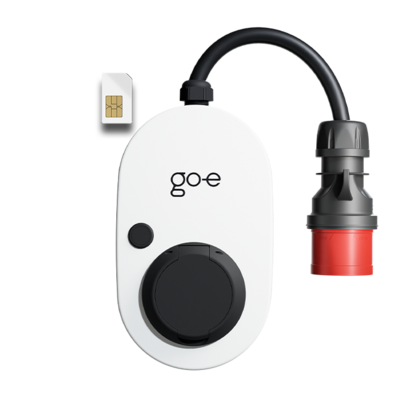
The go-e Charger Gemini flex 2.0 with integrated SIM card is here and offers you a free cellular connectivity for at least 5 years. An extension is possible for EUR12 (incl. VAT) per year. The mobile wallbox offers up to 22 kW charging power for 1-phase and 3-phase charging from 1.4 kW. The smart wallbox with even more connectivity can be used both stationary in the wall bracket and mobile.
new
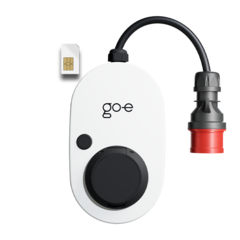
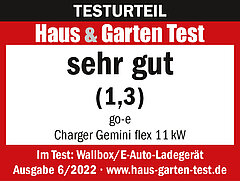
go-e Charger Gemini flex 2.0 11 kW
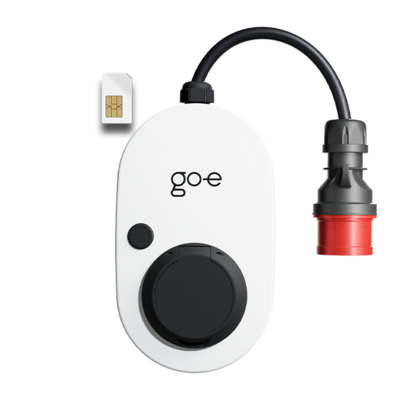
The go-e Charger Gemini flex 2.0 with integrated SIM card is here. The mobile wallbox offers up to 11 kW charging power for 1-phase and 3-phase charging from 1.4 kW. The smart wallbox with even more connectivity can be used both stationary in the wall bracket and mobile.
new
go-e Charger Gemini 2.0 22 kW

The go-e Charger Gemini 2.0 with integrated SIM card is here and offers you a free mobile phone connection for at least 5 years. An extension is possible for 12 euros (incl. VAT) per year. The stationary wallbox offers up to 22 kW charging power for 1-phase and 3-phase charging from 1.4 kW. The smart wallbox with even more connectivity for your home or company car park.
new
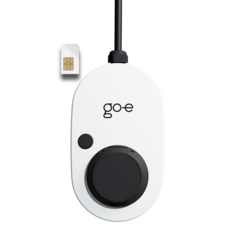
go-e Charger Gemini 2.0 11 kW

The go-e Charger Gemini 2.0 with integrated SIM card is here. The stationary wallbox offers up to 11 charging capacities for 1-phase and 3-phase charging from 1.4 kW. The smart wallbox with even more connectivity for your home or company car park.
go-e Charger Gemini flex 22 kW

The intelligent wallbox can be used both stationary in the wall bracket and mobile. No electrician is required for the installation of the charging station. Charging power from 1.4 kW to 22 kW. 1-phase or 3-phase charging.
go-e Charger Gemini flex 11 kW
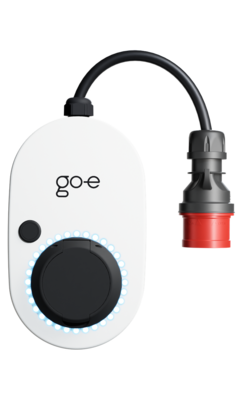
The intelligent wallbox can be used both stationary in the wall bracket and mobile. No electrician is required for the installation of the charging station. Charging power from 1.4 kW to 11 kW. 1-phase or 3-phase charging.
go-e Charger Gemini 22 kW
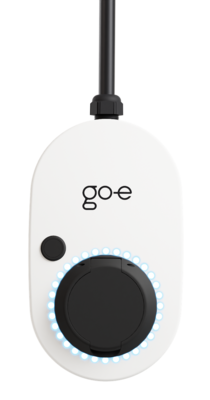
The compact wallbox for stationary use, at home or at the workplace. Simple installation, intuitive operation and smart comfort functions. Charging power from 1.4 kW to 22 kW. 1-phase or 3-phase charging.
go-e Charger Gemini 11 kW
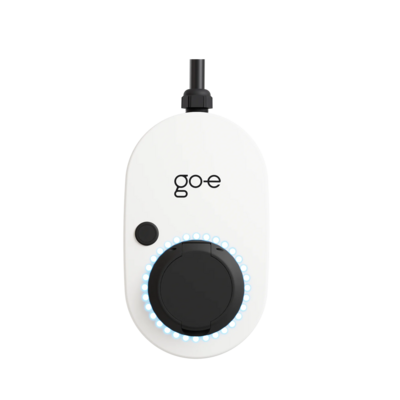
The compact wallbox for stationary use, at home or at the workplace. Simple installation, intuitive operation and smart comfort functions. Charging power from 1.4 kW to 11 kW. 1-phase or 3-phase charging.


![[Translate to Englisch:] Anzeige des Akkustands und der verbleibenden Reichweite eines Elektroautos.](/fileadmin/_processed_/4/c/csm_electric-car-battery-display-at-seventy-percent-ch-2026-01-08-02-22-18-utc_5f0ead225c.jpg "[Translate to Englisch:] Akkustand und Reichweite eines Elektroautos")