

Autonomous Driving Explained: How Self-Driving Cars Work 2026
Concerns about autonomous driving, which essentially means handing control of a vehicle to a computer, are understandable. A survey by Forbes shows that 60% of people worry about safety, 58% are not confident about the vehicle’s actions in emergencies, and 51% panic about bad weather. The data reflects some of the biggest challenges that engineers are still working to solve.
Here is the truth behind those consumer fears, how the technology actually attempts to solve them, and exactly which cars can drive themselves right now.
Most important facts at a glance:
Jump to the topics that interest you the most
What is Autonomous Driving?
Autonomous driving is basically a vehicle’s ability to drive, navigate, and make its own decisions in various traffic situations. The technology is classified into five levels, ranging from basic driver assistance systems to fully self-driving vehicles that require no human involvement.
Everything from standard driver assistance like adaptive cruise control to cars that can drive themselves without anyone in the driver's seat can be included in this definition. Driver assistance systems (ADAS) are very common now, and most of us use them without even thinking. But honestly, when it comes to fully autonomous cars, we’re just not quite there yet. There's still a lot to figure out before they can completely take over the roads.
What is the difference between automated and autonomous driving?
Advantages of autonomous driving
The dream of self-driving cars is all about taking the stress out of daily commutes. Autonomous vehicles aim to make our roads significantly safer, smoother, and more efficient for everyone. In fact, there are many more reasons for the technology to develop:
Disadvantages of autonomous driving
Despite all the pros, getting to a fully driverless future is proving to be a challenge. Teaching computers to handle unpredictable real-world roads is incredibly tough, leaving us with the following drawbacks:
How Does Autonomous Driving Work?
In autonomous driving, cameras capture visual details, and radar tracks speed. In the meantime, LiDAR uses lasers to map precise 3D environments. Onboard AI processes this data, and Car-to-X communication provides the vehicle with data from the surrounding infrastructure.
The hardware: The car's senses
To drive on its own, a vehicle first needs to understand what's happening around it. It does this using sensors designed to collect different types of information, essentially trying to do what humans do, hopefully without the road rage.
Gut zu wissen:
LiDAR stands for Light Detection and Ranging. It is a technology that uses light to map out the physical world, acting like a high-tech "eye" for autonomous cars, drones, and robots.
The software & network
Advanced software handles the actual chore of driving, processing data faster than a human brain ever could.
AI:
Car-to-X (V2X) communication:
5 Levels of Driving Automation
The SAE classification defines five levels of driving automation. The levels differ based on the amount of human input required for driving.
Automation Level | Capabilities | Driver required | Available in Europe? |
|---|---|---|---|
| Level 1: Minimal Driving Assistance | The system can assist with either steering or speed control (e.g., adaptive cruise control). | Yes | Widely available, including Germany & Austria |
Level 2: Partial automation | The system can control both steering and speed simultaneously, but the driver must constantly supervise. | Yes | Widely available, including Germany & Austria |
Level 3: Conditional automation | The vehicle can drive itself in specific situations, but the driver must be ready to take over when requested. | Yes, on request | Limited deployment (e.g., certain Mercedes-Benz systems in Germany) |
Level 4: High automation | The vehicle can operate without human intervention within defined areas or conditions (Operational Design Domain, ODD). | No, within ODD | Pilot projects and testing worldwide |
Level 5: Full automation | The vehicle can drive autonomously under all road and weather conditions without a driver. | No | Not yet available |
Level 1 & 2: The driver-assisted era
These systems are already standard features in everyday consumer cars. The golden rule here is simple: You, as the driver, are still 100% legally responsible for the car.
Main challenges: Level 1 & 2
Despite how beneficial this driving assistance sounds, there are reasons not everyone appreciates having it. Because Level 2 systems handle steering and braking so smoothly, drivers naturally let their guard down. They treat the car as self-driving, overestimating its abilities. This may lead to delayed reaction times when the system suddenly disconnects or misinterprets an obstacle (like a stopped emergency vehicle).
Level 3: Conditional Automation
Level 3 changes the entire legal definition of driving. For the first time, the machine is legally driving, not you.
Main Challenges: Level 3
The problem here is that expecting a driver who has been legally watching a movie or texting for an hour to suddenly regain full situational awareness within 10 seconds is incredibly risky. In addition, the feature is way too limited for its price. For instance, BMW offered it at €5,110 in Germany. It couldn’t function in construction zones or toll plazas, nor in rainy or wintry conditions when temperatures drop below 3°C (37.4°F). Due to the lack of consumer interest, they are currently switching to Level 2.
Level 4 & 5: The driverless reality
These levels eliminate the human factor entirely as a safety prerequisite.
These vehicles do not need a steering wheel and handle all dynamic driving emergencies on their own. Their only limit is geography, as they can only drive inside their strictly pre-mapped "geofenced" zone.
Main challenges: Level 4
If the geofenced area changes due to construction or a major accident, the car can become stranded, blocking traffic. That’s one of the concerns regulators have about Level 4 automation. On top of that, equipping cars with advanced LiDAR, radar, and camera suites is extremely expensive, which means they are not likely to become popular for private use.
Main challenges: Level 5
Despite the significant progress made in automated driving, achieving true human-level intuition without borders remains one of the hardest unsolved computing problems in the world.
Autonomous Driving in Germany
In Germany, Levels 1 and 2 are already common in production vehicles. Level 3 systems have recently been approved for limited use and are expected to expand gradually. Level 4 remains largely restricted to pilot projects and testing, while Level 5 vehicles are not yet commercially available.
The Kraftfahrt-Bundesamt (KBA), Germany’s Federal Motor Transport Authority, acts as the ultimate gatekeeper for autonomous driving by evaluating vehicle safety. They issue official type approvals and ensure that no self-driving system hits public roads without meeting strict safety standards.
Autonomous Driving in Austria
In Austria, the rollout of autonomous driving closely mirrors the broader European approach. As it stands:
Note:
The Bundesministerium für Innovation, Mobilität und Infrastruktur (BMIMI) acts as the ultimate gatekeeper for autonomous driving by evaluating vehicle safety. Under the nation's dedicated automated driving regulation (AutomatFahrV), they issue official type approvals and ensure that no self-driving system hits public roads without meeting strict safety standards.
Autonomous Driving Worldwide
Autonomous driving has become one of the defining technology races of this decade. Every country handles it differently. The U.S. prioritises innovation and real-world testing, China focuses on rapid scaling and affordability, while Europe emphasises safety and regulation. Each approach reflects a different balance between speed, risk, and public trust.
At the moment, no country in the world has yet established a comprehensive legal framework for fully automated and connected driving. Germany became the first nation worldwide to create the basis for the marketing (type approval) and operation (compliance with traffic regulations) of autonomous systems in defined operating areas.
The USA
The U.S. is taking a very market-driven approach. The country allows individual states to set the pace. For instance, San Francisco, Phoenix, and Austin already provide autonomous ride services. By 2030, the U.S. robotaxi market is expected to be worth around $19 billion.
So, fully driverless vehicles are already operating commercially in some geofenced areas. They don’t have steering wheels and don’t require safety drivers. At the same time, regulators are keeping a much closer eye on the industry. Following several high-profile incidents, like the one involving Tesla, the National Highway Traffic Safety Administration (NHTSA) has introduced new reporting requirements for automated driving systems.
China
If there is one country moving at full speed, it's China. Chinese vehicle manufacturers are among the world's most aggressive innovators. The Asia-Pacific region is expected to hit a CAGR of 36.9% from 2026 to 2035, and operators are aggressively lowering prices to accelerate adoption.
The scale is impressive. Cities such as Wuhan and Beijing have designated huge operating zones where thousands of autonomous vehicles provide rides every day. The global robotaxi market is projected to reach around $415 billion by 2035, while the commercial autonomous ride-hailing fleet is expected to grow from roughly 7,000 vehicles in 2026 to about 6 million within the next decade.
Europe
Europe, meanwhile, is doing what Europe does best: moving carefully and methodically. Regulators are not encouraging large-scale public deployments. That’s not their style. Europe is focused on building a comprehensive framework first. The main goal is to ensure the complete safety of autonomous rides.
Since these things take time, most commercial Level 4 deployments remain limited to tightly controlled shuttle services and public transit pilots.
What Autonomous Cars Need to Succeed
Autonomous vehicles need clear regulations, defined liability frameworks, and public trust in the technology. It is also crucial to provide accurate HD maps, reliable 5G/6G connectivity, powerful real-time data processing, and redundant safety systems to operate safely.
Infrastructure, maps & connectivity
The standard GPS used in Google Maps isn't accurate enough. Self-driving cars require HD maps that are accurate down to the centimetre. Furthermore, the infrastructure needs to be pristine — clearly painted lanes and highly visible signs make a massive difference. On top of that, a rock-solid, ultra-low-latency 5G or 6G cellular connection is a must for keeping Car-to-X communications flowing without any issues.
Data processing
The volume of data these cars must generate to function is mind-blowing. We're talking multiple terabytes per hour. The car's internal computer has to process this instantly. A tiny lag can be the difference between a clean stop and a fender bender.
From a safety perspective, the golden rule is redundancy. If a steering motor or a braking sensor fails while you're reading a book in the back seat, a secondary, completely independent backup system has to kick in immediately to bring the car to a safe stop.
Liability
While liability is relatively clear for Level 2 systems (the driver is responsible) and Level 3 systems (the manufacturer assumes liability when the system is active), establishing consistent regulations across countries for the more advanced levels remains a major challenge.
Which Cars Are Actually Driving Themselves?
As of 2026, there are no cars you can buy anywhere in the world that can drive completely on their own (Level 4 - 5 autonomy). Most vehicles instead use driver-assistance features, ranging from Level 2, where the driver must constantly pay attention and be ready to take control, to Level 3 autonomous driving, where the car can handle some tasks on its own under certain conditions.
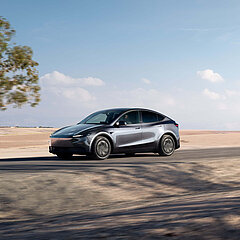
Self-driving cars
BMW has discontinued its Level 3 system and is currently focusing on Level 2 technology.
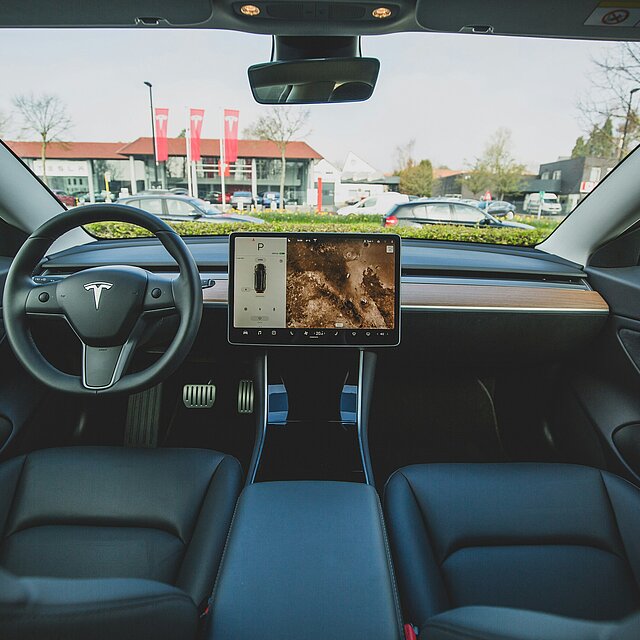
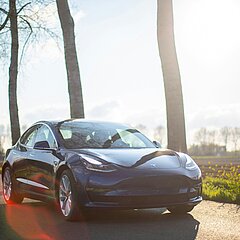
Patrick Kothmeier, drives a Tesla Model 3The autonomous system allows me to drive much more calmly and comfortably
During the first few weeks, I deliberately tested the system to learn both its strengths and its limitations. Now, I have a very high level of trust in the standard autopilot on the highway because I know the system handles that specific task extremely well. That said, I always stay alert and ready to take over if necessary. So far, however, that's hardly ever been needed.
Brand | Autonomy level | Where available | How it works |
|---|---|---|---|
| Mercedes-Benz DRIVE PILOT (Can be added as an optional feature on new Mercedes-Benz S-Class and EQS sedans) | Level 3 | Germany | On legally approved stretches of the German highway, you can take your hands off the wheel and eyes off the road up to 95 km/h. If it crashes while active, Mercedes takes the legal blame. |
Honda (SENSING Elite) | Level 3 | Japan | Designed specifically for stop-and-go highway traffic jams (operating under 31 mph), it allows the driver to get distracted by messages on the phone until the car prompts them to take over |
Tesla (Full Self-Driving / FSD) | Level 2++ * | Despite the "Full Self-Driving" name, it is legally a Level 2 system. The car handles incredibly complex urban steering and navigation, but you must pay attention 100% of the time and remain legally responsible. | |
| Waymo (Alphabet) | Level 4 | True driverless operation, but it's a commercial robotaxi service, not a car you can buy. It is restricted to specific geofenced cities like San Francisco and Phoenix. | |
| BMW (Symbiotic Drive) | Level 2 | Worldwide, including the UK, Germany, Austria, and many other countries | BMW has discontinued its Personal Pilot Level 3 system and is now focusing on its newer hands-off, eyes-on Level 2 technology. The company says Level 3 will only return when there is sufficient customer demand and a viable business case. |
* “Level 2+” and “Level 2++” are not official SAE automation levels. They are marketing terms used by some manufacturers, including Tesla and Mercedes-Benz, to describe highly advanced driver-assistance systems. Legally, these are still Level 2 systems. However, they go way beyond the basics. Instead of just keeping you in your lane, they can navigate complex driving environments like roundabouts, stop signs, traffic lights, and lane changes.
Who is Liable in an Accident of a Self-Driving Car?
Liability splits cleanly along automation levels. For Level 2 systems like Tesla's autonomous driving, the human driver retains full liability. For certified Level 3 systems like Mercedes DRIVE PILOT, legal liability shifts directly to the manufacturer while active, backed by a strict three-pillar insurance model.
Level 2 (Tesla FSD, GM Super Cruise, etc.)
The law views these vehicles strictly as standard cars equipped with advanced cruise control. The person in the driver's seat remains the sole legal driver of the vehicle at all times and must actively watch the road.
Level 3 (Mercedes DRIVE PILOT)
The human is no longer legally considered the driver while the system is engaged—the vehicle manufacturer is. Control is temporarily handed over to the machine within highly specific parameters (such as German highways).
Level 4 (Verne)
The human factor inside the car is completely removed. Legal frameworks require a commercial entity to operate the vehicles within strictly pre-mapped, geofenced areas.
Level 5
This represents absolute driving automation under all conditions, anywhere on Earth (unmapped dirt roads, torrential downpours, or blizzards). The human factor is permanently eliminated.
Recent Autonomous Driving Tests
Despite impressive demos, recent independent tests show that autonomous driving systems still have clear weaknesses.
2. China's massive safety test: 36 cars, 15 hazard scenarios
To find out what happens when driving software meets chaos, Chinese media outlet Dongchedi conducted one of the largest ADAS stress tests ever recorded. They lined up 36 vehicles against 15 extreme hazard scenarios, including sudden highway cut-offs, unmapped construction debris, and a simulated wild boar darting across the road.
The test recorded 216 total crashes across the fleet. While Tesla’s Model 3 and Model X safely navigated the bulk of the high-speed highway emergencies, a shocking majority of the vehicles failed when a lead car suddenly swerved to reveal a stopped hazard. In a bizarre twist, one Mercedes test car had its front radar sensor completely shattered by the simulated boar. The takeaway here is clear: current assistance tech is brilliant on a pristine highway, but terrifyingly blind to sudden, messy real-world clutter.
3. Tesla FSD in South Korea: A real-world road trip test
Tesla's camera-only, neural-network approach faced a massive official audit when the Korea Expressway Corporation took Full Self-Driving (FSD) on an all-day cross-country road trip through dense urban centres like Daejeon and high-speed tollways.
Government testers explicitly noted that in complex city traffic, FSD's spatial awareness and lane-carving "already exceeds that of general human drivers," navigating tight grids and intersections with smooth confidence.
Tesla allows users to select driving profiles ranging from "Sloth" to "Mad Max." Testers noted that when dialled into the more aggressive settings, the AI frequently broke traffic laws, speeding past legal limits and mistakenly sliding into bus-only lanes. It proved that while the AI can drive smoothly, it doesn't always care about municipal ticket rules.
How Self-Driving Technology Could Change Transportation
Autonomous vehicles could reshape transportation by making travel safer, smarter, greener, and more accessible. They can help prevent accidents caused by human error, improve traffic flow, and make travel easier and less stressful.
1. Reduction in traffic fatalities
According to traffic safety data, human error accounts for roughly 94% to 95% of all motor vehicle crashes. Checking a text message for just a second, driving while exhausted after a long day, or simply reacting too slowly when something unexpected happens can all have serious consequences. Self-driving systems don't get tired, distracted, or emotional. That’s why many experts believe that wider adoption of autonomous vehicles could significantly reduce the number of accidents on our roads.
2. Increased traffic efficiency and reduced congestion
You’re stuck in a five-mile backup, finally reach the front, and... nothing is there. No accident, no construction. Just a ghost bottleneck. This happens because of the "ripple effect." One human brakes too hard, the driver behind them panics and slams their brakes even harder, and within minutes, traffic blocks up miles backward. Autonomous cars talk to each other and read the road using advanced predictive algorithms. This way, they can smooth out the ripple effect.
3. Environmental sustainability and fuel economy
When heavy freight trucks drive close together on the highway via vehicle-to-everything communication, it’s called platooning. This synchronised drafting significantly cuts down aerodynamic drag. The data shows platooning can slash fuel consumption in logistics trucks by 4% to 10%. Combined with AI that maps routes to avoid stop-and-go energy waste, a driverless trip inherently leaves a much smaller carbon footprint.
4. Improved accessibility
For anyone who can’t drive due to age, visual impairments, or physical disabilities, our current world can feel incredibly small and isolating. A fully automated vehicle provides total independence.
For commuters, it completely reclaims "dead time." Instead of gripping a steering wheel in a stressful commute, you can convert your car into a mobile office to crank out emails, or flip the seat back to get 45 minutes of guilt-free rest before the workday even starts.
Use case category | Specific application | Primary impact |
|---|---|---|
Urban mobility | Robotaxis & Autonomous shuttles | Reduces private car ownership in dense cities |
Freight & Logistics | Long-haul tighway trucking | Solves the global driver shortage and allows cargo to move 24/7 without federally mandated driver rest breaks |
Industrial | Mining, Ports, & Agriculture | Increases safety in hazardous conditions (e.g., automated open-pit mining) |
Consumer convenience | Autonomous Valet Parking (AVP) | Enhances convenience and reduces parking operation costs |
Key Challenges on the Road to Full Autonomy
Self-driving cars have come a long way, but you probably wouldn’t want one to handle every possible road situation just yet. Real traffic is people crossing where they shouldn’t, the weather changing quickly, and not every road being clearly marked. That’s why fully autonomous driving still faces a few big challenges.
Countries like Germany are pioneering the legal shift into true Level 3 driving in Europe. Unlike the assisted steering you see in most cars today (where you must keep your hands on the wheel), Level 3 means the car is legally driving, and the manufacturer accepts full liability during that time.
Meanwhile, fully driverless Level 4 and 5 systems are staying locked inside "geofenced" playpens. Examples include airport shuttles, university campuses, or tightly mapped pilot zones in major urban centres.
The engineering is impressive, but building a system that works perfectly in a sunny lab is a world away from reality.
Main Challenges of Autonomous Driving:
Autonomous driving technology is moving fast, though its real-world rollout will be a slow burn. For now, the real wins are increasingly clever driver-assistance features, like highway lane-keeping that stops you from drifting while fighting a coffee lid, or automatic emergency braking that saves your bumper from a sudden traffic jam. Fully autonomous cars might eventually rule the roads, but we still have to clear massive technical, regulatory, and societal hurdles first, like teaching an AI how to handle a blinding Austrian blizzard, or figuring out who the police actually ticket when a driverless car running on zero sleep accidentally runs a red light.
![[Translate to Englisch:]](/fileadmin/_processed_/d/7/csm_electric-vehicle-lithium-nmc-battery-electric-car-2025-01-29-04-42-32-utc-min_0d337e19d4.jpeg "[Translate to Englisch:]")