Why is real energy consumption different from the WLTP figure?
WLTP range is measured under test conditions. Real driving depends on speed, weather, traffic, and driving style.
You'll pay twice as much per kilometre if you choose the VW ID.4 GTX 4Motion over the Mercedes-Benz CLA Coupé 250+ EQ. Why? Because the VW consumes 26.9 kWh/100 km, while the Mercedes needs only 13.4 kWh/100 km. Even though these figures do show a significant difference, they are not absolute. EV consumption can be affected by a bunch of factors, including driving speed, tyre pressure, vehicle load, weather conditions, terrain, and the battery state of health.
Read on to find out how much every kilometre of electric driving costs, how to choose the cheapest charging options, and which EV models are the most efficient.
Key facts at a glance:
Jump to the topics that interest you the most
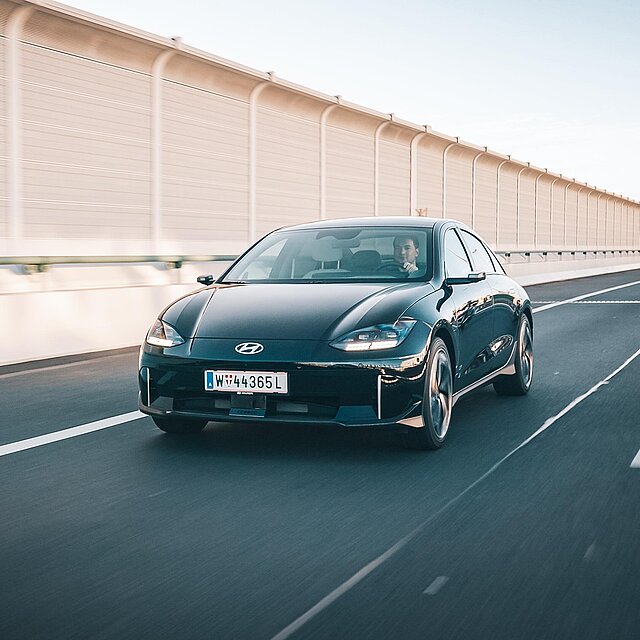
An electric car consumes around 15 kWh per 100 km on average. For example, a Hyundai IONIQ 6 is an EV with decent efficiency, consuming around 13.9 kWh to 15.1 kWh per 100 km (WLTP) depending on the configuration variant.
Several factors influence the energy consumption of an electric car:
Higher speeds increase air resistance, which impacts consumption. The difference is especially noticeable on motorways. For instance, consumption at 130 km/h can be 10 - 20% higher than at 100 km/h.
Here’s how a Renault ZOE handles speed increase:
Speed(km/h) | Estimated consumption (kWh/100 km) | Consumption increase (%) |
|---|---|---|
40 | 14.91 | 2.8 |
50 | 14.5 | 0.0 |
60 | 15.5 | 6.9 |
70 | 16.2 | 11.7 |
80 | 16.7 | 15.2 |
90 | 17.7 | 22.1 |
100 | 18.71 | 29.0 |
110 | 19.3 | 33.1 |
120 | 20.5 | 41.4 |
130 | 21.5 | 48.3 |
Motorways, mountain roads, and steep climbs increase fuel consumption simply because the engine has to work harder. You probably know that downhill sections can recover some energy through recuperation. Nevertheless, they usually do not fully offset the energy used uphill.
When you accelerate smoothly instead of flooring the pedal every time you want to go a little faster, you'll use less energy. The same goes for braking: anticipate what's ahead and slow down gradually, instead of waiting until the last second and sending your passengers flying forward at every traffic light.
Cold weather reduces battery efficiency and forces your EV to work harder to keep you warm. Wind and rain don't help either, as they increase resistance. Summer air conditioning also uses energy, but winter heating usually takes a much bigger bite out of your range.
Vehicle | Consumption in summer (kWh/100 km) | Consumption in winter (kWh/100 km) |
|---|---|---|
BMW iX1 xDrive30 | 16.5 | 22.3 |
BYD Atto 3 | 17.5 | 25.1 |
Cupra Born | 19.2 | 24.0 |
MG4 | 16.0 | 20.8 |
VW ID.5 | 18.7 | 23.6 |
Source: ADAC
Heating and cooling the cabin while you drive means using energy that could otherwise take you further on a single charge. If you pre-condition the cabin while the car is still plugged in, you can save battery power for driving.
Passengers, luggage, roof boxes, bike carriers, trailers and caravans add weight or aerodynamic drag. Remove unnecessary items before longer journeys to lower consumption.
Whether you charge at home, at a public AC charger, or at a fast DC charger has a big impact on your charging costs. Here's how the typical costs compare in the UK.
Charging option | Average electricity price per kWh | Cost at 15 kWh/100 km |
|---|---|---|
PV surplus charging at home | £0.00 - 0.1 | £0.00 - 1.5 |
Home wallbox | £0.26 | £3.91 |
Public charging AC | £9.6 | |
Public charging DC | £0.74 | £11.1 |
Note:
The electricity prices shown are average values collected in July 2026. Actual charging costs may vary depending on your electricity provider, charging network, tariff, and location.
Based on the average charging prices shown in the table above, public DC charging in the UK costs around £11.1/100 km. If you charge only at home for £0.26, the cost goes down to £3.9/100 km (based on 15 kWh/100 km consumption). Split charging 50/50 between home and DC public chargers, and you pay around £7.5/100 km.
So, if you charge your electric car mainly at home, you can potentially save up to £1,080 per year (assuming 15,000 km driven annually). The savings can be even higher if you use a smart wallbox, enabling you to benefit from flexible energy tariffs and charge when electricity is the cheapest.
If you want to know the charging costs for a specific electric car, you can use the electric car power consumption calculator from the European Alternative Fuels Observatory. Simply select your country and the EV model, enter the average vehicle consumption, monthly kilometres driven, and a few other factors, and you'll get an estimated monthly price immediately.
The electricity consumption of an electric car per year with medium usage is around 1,714 kWh, based on the UK average of 7,100 miles (11,426 km). If you charge exclusively at home, it would cost you around £446 a year. If you use a mix of home and DC public charging, your yearly costs would be approximately £857.
Note:
Charging losses may occur, meaning that the electricity drawn from the grid can be higher than the energy stored in the battery. Consider this when checking your charging costs.
To calculate charging costs, use this formula:
consumption (kWh/100 km) x electricity price per kWh = cost per 100 km.
For monthly cost, multiply by kilometres driven per month and divide by 100.
Example: If an EV consumes 15 kWh/100 km and you drive 500 km per month, it uses about 75 kWh per month. Multiply 75 by your average charging price.
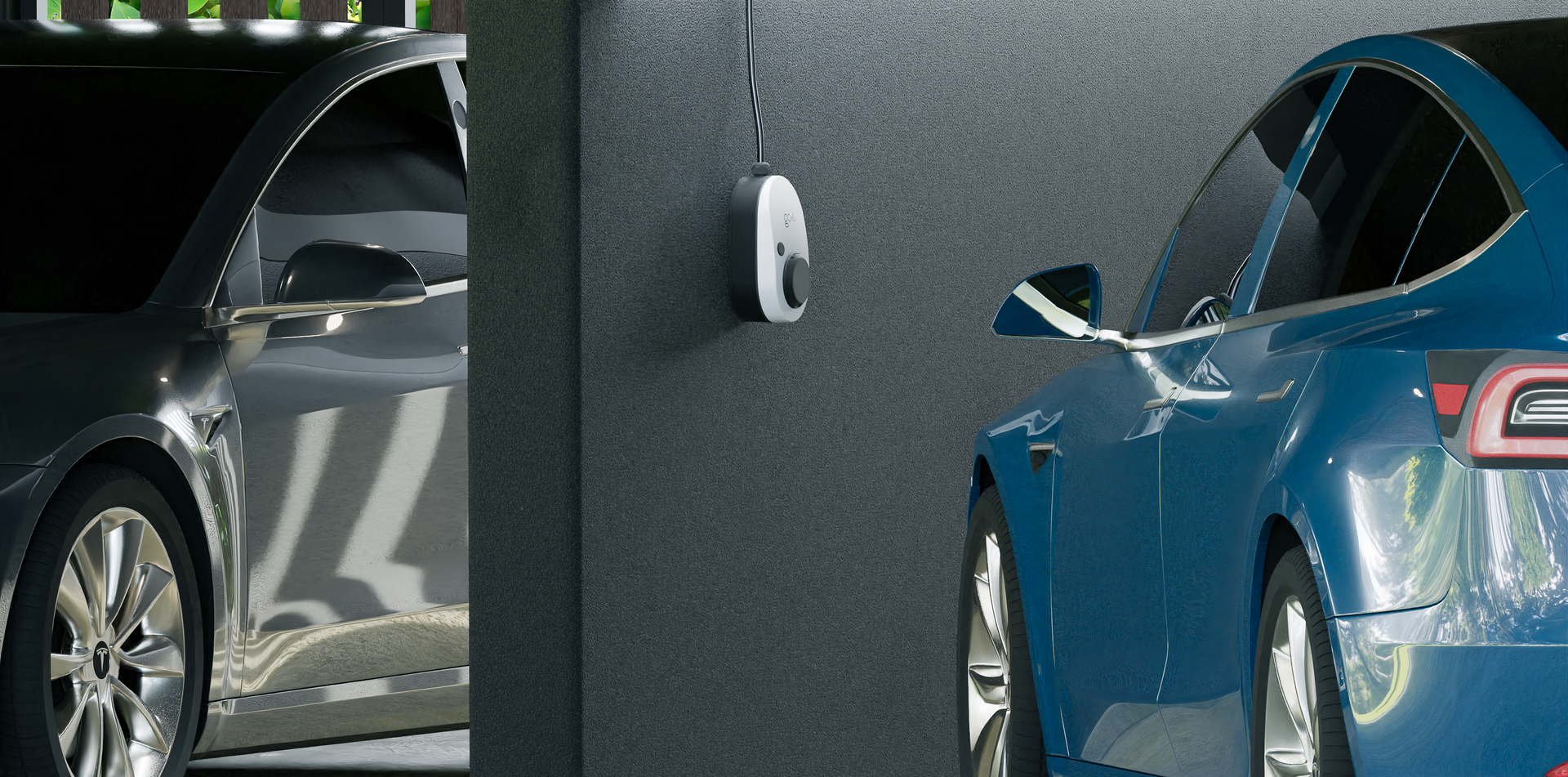
You can charge cheaply with a home wallbox like the go-e Charger, and save even more by using PV surplus charging. Public charging is usually the most expensive option.
An electric car is generally cheaper and far more efficient than a petrol car. Example calculation with a typical petrol price: the BMW 4 Series petrol (7.6 L/100 km, 158.74 p/L) costs about £12.06 per 100 km. An EV using 15 kWh/100 km costs £3.92/100 km with home charging (26.11p/kWh) or £11.1/100 km at public chargers (74p/kWh), saving up to 68% compared with petrol.
Furthermore, petrol engines convert only 25% of energy into motion, whereas EVs achieve 85% efficiency and recover energy via regenerative braking. You might argue that ICE vehicles can go further per refill. The thing is, though, that the great number of public chargers and the ridiculously convenient option of home charging make this less relevant.
As of January 2026, Germany had over two million electric cars, saving almost 1.4 billion litres of fuel each year. That’s like filling nine million bathtubs with gasoline and diesel. These cars cut CO2 emissions by about four million tonnes annually, which is the same as 160 million trees absorbing. It's a big win for the climate without losing out on mobility or fun driving.

Ronald Kroke, Head of Marketing go-eIndividual driving style and profile are decisive
With current EV battery technology, a significant increase in consumption is unavoidable in winter. But personal driving behaviour has a major influence on consumption. If you drive a lot on the highway, you should also compare vehicle weight and wind resistance in addition to WLTP consumption when choosing a BEV.
According to the ADAC Ecotest, the best-performing models use around 13 - 15 kWh/100 km, while the least efficient consume close to 30 kWh/100 km. That difference can nearly double your charging costs.
ADAC has measured electricity consumption using a standardised mixed driving cycle under identical test conditions. Unlike WLTP values, the results include charging losses.
EVs with the lowest consumption
EV model | Ecotest consumption (kWh/100 km) | WLTP consumption (kWh/100 km) |
|---|---|---|
Mercedes-Benz CLA Coupé 250+ EQ | 13.4 | 12.2 |
Mini Aceman SE Favoured Trim | 15.5 | 14.4 |
Hyundai IONIQ 6 (77.4 kWh) 2WD | 15.5 | 14.3 |
Electricity consumption varies depending on factors such as vehicle size, weight, aerodynamics, drivetrain, and tyre choice. As a result, some EVs require nearly twice as much energy to travel the same distance.
EVs with the highest consumption
EV model | Ecotest consumption (kWh/100 km) | WLTP consumption (kWh/100 km) |
|---|---|---|
Citroen e-Spacetourer XL (75 kWh) Shine | 29.7 | 26.6 |
Volvo XC40 Recharge Pure Electric Twin Pro AWD | 28.8 | 23.8 |
VW ID.4 GTX 4Motion | 26.9 | 18.3 |
Electric cars vary considerably in energy consumption. Compare their official efficiency figures alongside a standout feature that sets each model apart.
| EV model | Ecotest consumption (kWh/100 km) | WLTP consumption (kWh/100 km) | Good to know |
|---|---|---|---|
| Mercedes-Benz CLA Coupé 250+ EQ Progressive | 13.4 | 12.2 | Supports up to 350 kW DC charging, adding over 300 km of range in 10 minutes |
| Mercedes CLA Coupé 350 EQ AMG Line 4Matic | 14.8 | 12.7 | Targets an ultra-low drag coefficient to maximise highway range |
| Dacia Spring Electric 65 Expression | 16.7 | 13.2 | One of the lightest passenger EVs, delivering excellent urban efficiency with a compact battery |
| Toyota bZ4X Comfort-Paket | 17 | 14.4 | Features specialised infrared heating panels beneath the steering column and dashboard to warm front passenger legs quickly with minimal energy draw |
| MGS5 EV Long Range Luxury | 17.4 | 16 | Features a robust lithium iron phosphate chemistry, allowing owners to safely charge the battery to 100% daily without accelerated cell wear |
| Fiat 600e La Prima | 18.2 | 15.1 | Includes a power-massage driver's seat and ambient lighting with 8 colour palettes, creating up to 64 relaxing atmosphere combinations |
| Smart #3 Premium (22 kW OBC) | 18.2 | 16.3 | Uses premium SiC (silicon carbide) semiconductors in the drivetrain inverter to minimise energy conversion loss and maximise highway efficiency |
| Suzuki e Vitara eAxle (61 kWh) Comfort+ | 18.8 | 15.1 | Includes a high-efficiency heat pump as standard equipment to protect the winter driving range |
| VW ID.3 Pro S | 19.2 | 15.3 | The 77 kWh battery model replaces the rear centre seat, making it a dedicated 4-seater to meet weight and payload limits. |
| Genesis Electrified G80 Premium AWD | 21.3 | 18.1 | Can charge from 10% to 80% in just 22 minutes at a 350 kW charger |
| Renault Kangoo E-TECH El. EV45 Techno | 21.9 | 19.2 | Can accept up to 22 kW AC |
| VW ID.4 GTX 4Motion | 26.9 | 18.3 | To protect your highway range, it drives purely via the rear wheels during normal cruising |
| VW ID. Buzz Pro | 23.3 | 20.6 | Automatically warms or cools the battery for faster DC fast charging when a charger is set as the navigation destination. |
| Porsche Macan | 20.1 | 17 | Active aerodynamics, including automatic cooling flaps and an adaptive rear spoiler, lower drag at high speeds to protect highway range |
| Ford Mustang Mach-E Extended Range AWD | 23.6 | 18.7 | Intelligently pre-conditions the 88 kWh battery to maintain efficiency in extreme hot or cold weather |
An electric car can drive 150 - 700 kilometres on one charge, depending on the model, speed, weather conditions, battery capacity, and other factors. While cars like the Mercedes-Benz EQS and the Lucid Air Dream Edition can cover distances exceeding 700 kilometres, small vehicles like Leapmotor T03 can do around 200 km.
The lower an EV's electricity consumption (kWh/100 km), the farther you can drive on the same amount of stored energy. For example, a car with a 75 kWh battery consuming 15 kWh/100 km can theoretically travel around 500 km, whereas a model using 20 kWh/100 km would cover only about 375 km.
ADAC Ecotest results show that many modern long-range EVs achieve 450 - 500 km in real-world driving.
Among the best-performing models are:
A large battery doesn’t necessarily mean long range. For example, the Cupra Born has a 60 kWh battery and a WLTP range of 427 km. In comparison, the Mercedes-Benz EQV, also with a 60 kWh battery, will take you as far as 242 km on a single charge (WLTP). One of the reasons for this is that the former is a compact hatchback, while the latter is a van. But the fact remains the same — their energy consumption is radically different. That’s why, when choosing an electric car, you should check not only its battery size and range but also its consumption to know how much that range will actually cost you.
To reduce EV energy consumption, consider easing off the accelerator, using climate control wisely, keeping your tyres properly inflated, and choosing an efficient EV.
Tip 1: Slow down. Driving at 100 km/h instead of 130 km/h can reduce energy consumption by 10 - 20%.
Tip 2: Use the heater and air conditioning only when needed. Heating or cooling uses energy that could otherwise increase your driving range. So pre-condition the cabin while the car is still plugged in whenever it is possible.
Tip 3: Accelerate and brake gently. Driving steadily is way more efficient than frequent hard acceleration and braking.
Tip 4: Check your tyre pressure regularly. Under-inflated tyres increase rolling resistance. This way, the car uses more electricity. To avoid losing energy for no good reason, make sure your tyres are inflated according to the manufacturer's recommended pressure.
Tip 5: Unpack as soon as you can. Stop carrying heavy loads like camping gear, sports equipment, or heavy boxes just in case. The lighter the car, the less energy it uses.
Tip 6: Plan your route. If possible, choose flatter roads over steep, hilly ones. Yes, regenerative braking can recover some energy when you’re rolling down. But it’s less compared to the amount the vehicle consumes when driving uphill.
Tip 7: Look after your battery. Avoid unnecessary battery stress. Charge with AC instead of DC whenever possible. The battery is efficient when it is healthy.
Tip 8: When you're buying an EV, check efficiency first. The range is not everything. A more efficient model will allow you to travel farther on a smaller battery. This automatically translates into lower charging costs.
Bottom line
When choosing an EV, consider not only the range, whether WLTP or real-world, but also efficiency. In daily life, it matters much more than a massive battery. Driving a highly efficient model means having low running costs and basically getting more out of every charge.
In fact, efficiency in general is exactly why EVs offer great long-term savings compared to petrol cars. Electric motors convert energy into motion way better than internal combustion engines. On top of that, they even get some power back through regenerative braking, meaning the investment pays off the more you drive.
Change language
How would you like to share the content ""?
In order to provide the best user experience, we need to use some third party technologies. In the following form, you can set your preferences. If you want to change the preferences later on, you can always do this on our privacy settings page. Here you can find our privacy agreement and contact information.
Necessary cookies and functions are required to use the web-site in its basic form.
A required cookie to store login information for the backend, this is relevant for content managers only.
A required cookie to store your privacy preferences.
Functions extend the basic features of the website, third party technologies will be included and they might also collect information on their own.
Allows displaying map-material (images) from openstreetmap to provide interactive map-features. By allowing this feature, you accept the privacy agreement of openstreetmap.
Allows the playback of videos, that are hosted on vimeo.com. By allowing this feature, you acceot the privacy agreement of vimeo.
Allows the playback of videos, that are hosted on youtube.com. By allowing this feature, you accept the privacy agreement of google.
Allows the integration of Google Maps functionality. By allowing this feature, you accept the privacy agreement of google.
Allows the integration of AI-generated content. The content is being reviewed actively, but may contain any kind of third party services.
This chat uses a cookie to interact with you and maintain your chat history for quality assurance (see our Privacy Policy).
Allows the inclusion of ReCaptcha to helper us identify you as a human person. By allowing this feature, you accept the privacy agreement of google.
These cookies may be set by our partners through our website to profile your interests and show you relevant ads on other websites. The cookies do not store any direct personal data, but can uniquely identify your browser and device. If you do not allow this cookie, you will more often see non-personalised advertising. These cookies are only used with your consent and only as long as you have not deactivated the respective cookie.
One of the marketing cookies we use is Google Analytics, Facebook Pixel and Hotjar. We cannot rule out the possibility that Google Ireland or Meta Irland may pass on personal data to their parent company in the USA and that US security authorities may gain access to data on the basis of current legislation. If you allow marketing cookies, you expressly consent to this data transfer in accordance with Art. 49 (1) DSGVO.
These cookies enable us to determine visits, visitor sources and data on visitor behaviour in order to improve the quality of our website. This enables us to determine, among other things, which pages are the most popular and how visitors move around the website. The information collected is aggregated and cannot be directly attributed to an individual. If you allow these cookies, we can constantly develop the offers on our website according to your wishes.