
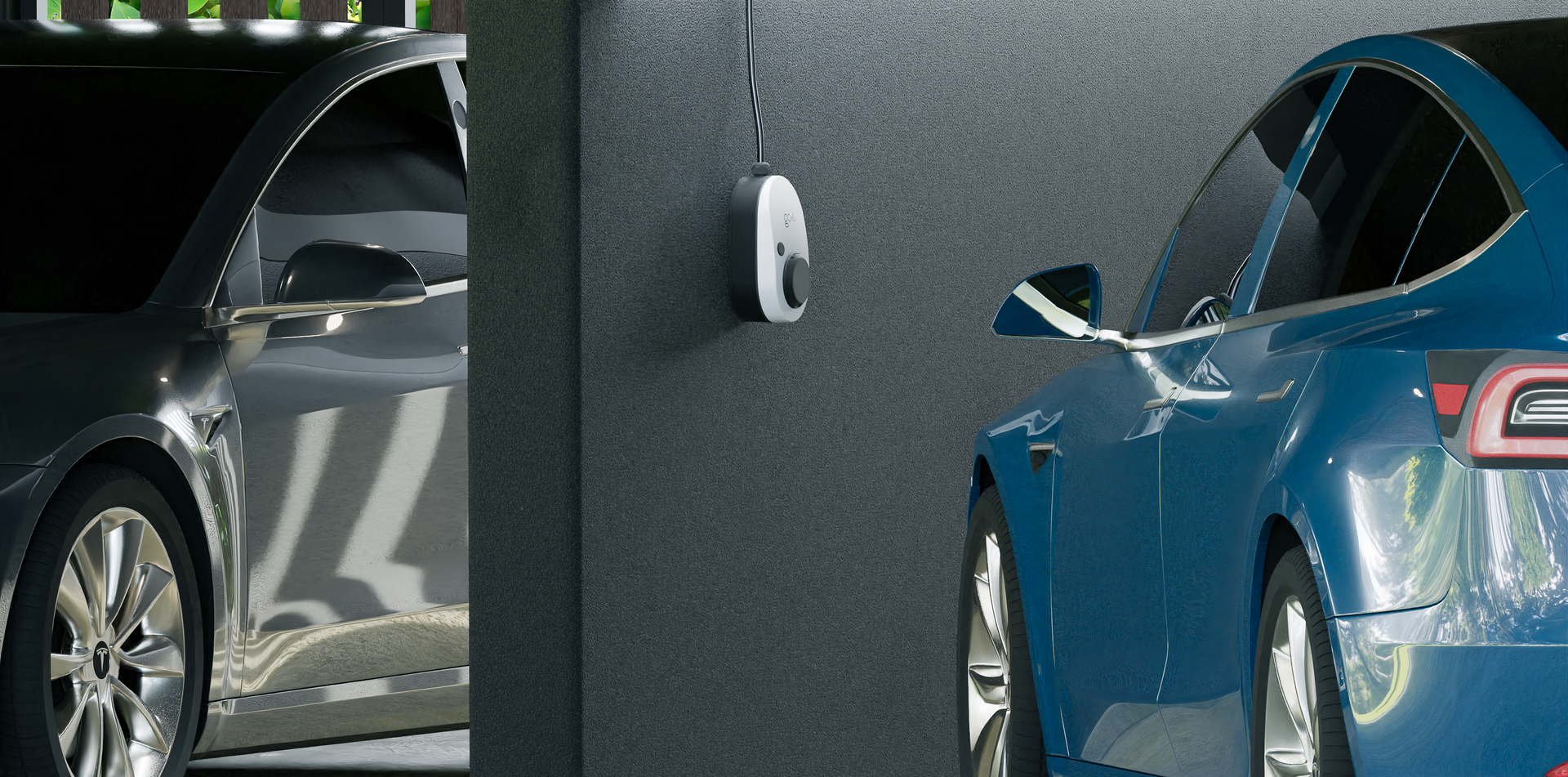
Tesla Charging at Home: The Ultimate Guide for Tesla Owners
Would you like to charge your Tesla not only at public charging stations, but also at home? Great! This will definitely make your everyday life much more relaxed, as you'll always have a fully charged car in the garage and you'll also be doing something good for your car battery. But did you know that you can charge much more cheaply than at public DC and AC charging stations?
This blog post explains how you can charge your Tesla at home and get even more out of your charging process.
Why Should You Charge Your Tesla at Home?
Charging your Tesla at home offers numerous advantages. Here are some reasons why this option is so interesting for electric car drivers:
How Can You Charge Your Tesla at Home?
You can charge your Tesla at home using a normal socket or a wallbox.
What Charging Power Do You Need to Charge Your Tesla at Home
If you want to charge your Tesla quickly, we recommend a wallbox with up to 11 or 22 kW charging power.
Please note that only very old Tesla Model S can charge with 22 kW. All newer Teslas charge with a maximum of 11 kW AC. This makes it all the more interesting that the Tesla wallbox is only available with a maximum charging power of 22 kW, which unfortunately can also lead to problems with the approval of the wallbox by the network operator in some cases.
Our go-e Chargers are available with up to 11 kW and up to 22 kW charging power.
new
go-e Charger Gemini flex 2.0 11 kW

The go-e Charger Gemini flex 2.0 with integrated SIM card is here. The mobile wallbox offers up to 11 kW charging power for 1-phase and 3-phase charging from 1.4 kW. The smart wallbox with even more connectivity can be used both stationary in the wall bracket and mobile.
new
go-e Charger Gemini flex 2.0 22 kW
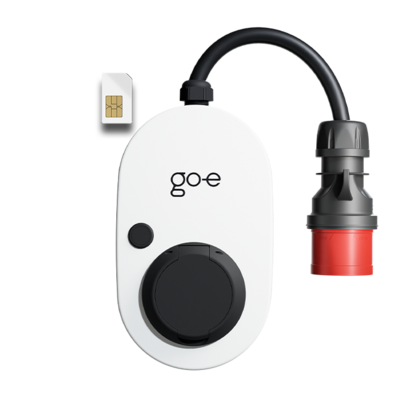
The go-e Charger Gemini flex 2.0 with integrated SIM card is here and offers you a free cellular connectivity for at least 5 years. An extension is possible for EUR12 (incl. VAT) per year. The mobile wallbox offers up to 22 kW charging power for 1-phase and 3-phase charging from 1.4 kW. The smart wallbox with even more connectivity can be used both stationary in the wall bracket and mobile.
new
go-e Charger Gemini 2.0 11 kW

The go-e Charger Gemini 2.0 with integrated SIM card is here. The stationary wallbox offers up to 11 charging capacities for 1-phase and 3-phase charging from 1.4 kW. The smart wallbox with even more connectivity for your home or company car park.
new
go-e Charger Gemini 2.0 22 kW

The go-e Charger Gemini 2.0 with integrated SIM card is here and offers you a free mobile phone connection for at least 5 years. An extension is possible for 12 euros (incl. VAT) per year. The stationary wallbox offers up to 22 kW charging power for 1-phase and 3-phase charging from 1.4 kW. The smart wallbox with even more connectivity for your home or company car park.
Wallbox for Tesla: What Should You Consider When Buying One?
When buying a wallbox for your Tesla, think carefully about which functions are important to you and where you want to use the charging station. Do you only want to charge at home or do you perhaps want to take the wallbox with you when travelling or visiting friends and family to charge your electric car?
This is important to know because the Tesla charging box, for example, is only available as a stationary unit. It is therefore permanently wired to the house connection and must be installed by an electrician, which incurs installation costs.
However, if you want to take your wallbox with you from time to time, then a mobile wallbox such as the go-e Charger Gemini flex 2.0 is the right device for you. You can simply plug the charger into a red CEE socket, unplug it, put it in the boot and take it with you. AND you don't need an electrician to install and remove it. Of course, the go-e Charger is also available as a stationary wallbox if you are sure that you only want to charge at home.
Wallbox functions in comparison
Functions | go-e Charger | Tesla charging box |
App control | Yes, via wallbox app | Yes, via vehicle app |
Simple load planning | Yes | Yes |
Smart load planning | Yes | Partially |
Charging with flexible electricity tariffs | Yes, cheapest hours and with adjustable price limit | Yes, only favourable hours |
Fully automated PV surplus charging | Yes, in combination with go-e Controller or other EMS | Yes, in combination with Tesla Powerwall or other EMS |
Dynamic load management | Yes | No |
Phase switching | Yes | No |
Interfaces (open API, local HTTP API, MQTT, Modbus TCP, OCPP) | Yes | No |
Installing a Wallbox: What Needs to be Considered?
Installing a wallbox for your Tesla is relatively straightforward in Austria, but requires a few considerations:
Tesla Charging at Home: The Costs
Charging your Tesla at home costs 22 cents per kWh or less. However, this depends on various factors, such as the time you charge, the charging tariff you use to charge your Tesla and whether or not you charge with excess PV.
Smart Charging: Efficient and Cost-Effective Charging at Home
If you want to charge your Tesla cheaply and efficiently at home, we have a few tips for you here that can help you:
1. Use a wallbox with smart functions:
A smart wallbox with intelligent functions and Wi-Fi or Wi-Fi and mobile radio, such as the go-e Charger, can help you save money.
The wallbox from go-e can be controlled remotely via an app. It has simple and smart charging planning with flexible electricity tariffs. You can also use the wallbox for fully automated charging with PV surplus and much more.
If you have programming skills or use third-party integrations, the go-e Charger is an exciting device thanks to the open API and other interfaces such as Modbus TCP, MQTT or OCPP, as the wallbox adapts to existing systems and not the other way round.
Let's take a closer look at the individual functions to make it even more tangible what this means for your everyday life with your Tesla.
For example, if you want to plan the next charging process, simply set the charging timer in the go-e app so that your electric car charges within a certain period of time. If you want to get even more out of the charging planning, then set a maximum kWh quantity until the next departure or the maximum acceptable electricity price for you. With this setup, you ensure that the go-e Charger pauses the charging process if the energy price is above the price you have set. If it falls again and is within the desired price range, the wallbox automatically starts charging again. At the same time, you receive the desired amount of electricity. Ingenious, isn't it? Here you benefit from the integrated flexible electricity tariffs, as they pass on the ongoing fluctuations on the electricity exchange directly to you and you only charge your Tesla when the electricity prices are at their lowest.
2. Keep the charge level in the optimum range
Wir empfehlen dir, deine Tesla-Batterie zwischen 20 % und 80 % zu halten, um die Lebensdauer zu maximieren. Für den täglichen Gebrauch ist es selten notwendig, die Batterie vollständig aufzuladen, es sei denn, du planst eine längere Strecke zu fahren.





![[Translate to Englisch:]](/fileadmin/_processed_/d/7/csm_electric-vehicle-lithium-nmc-battery-electric-car-2025-01-29-04-42-32-utc-min_0d337e19d4.jpeg "[Translate to Englisch:]")