
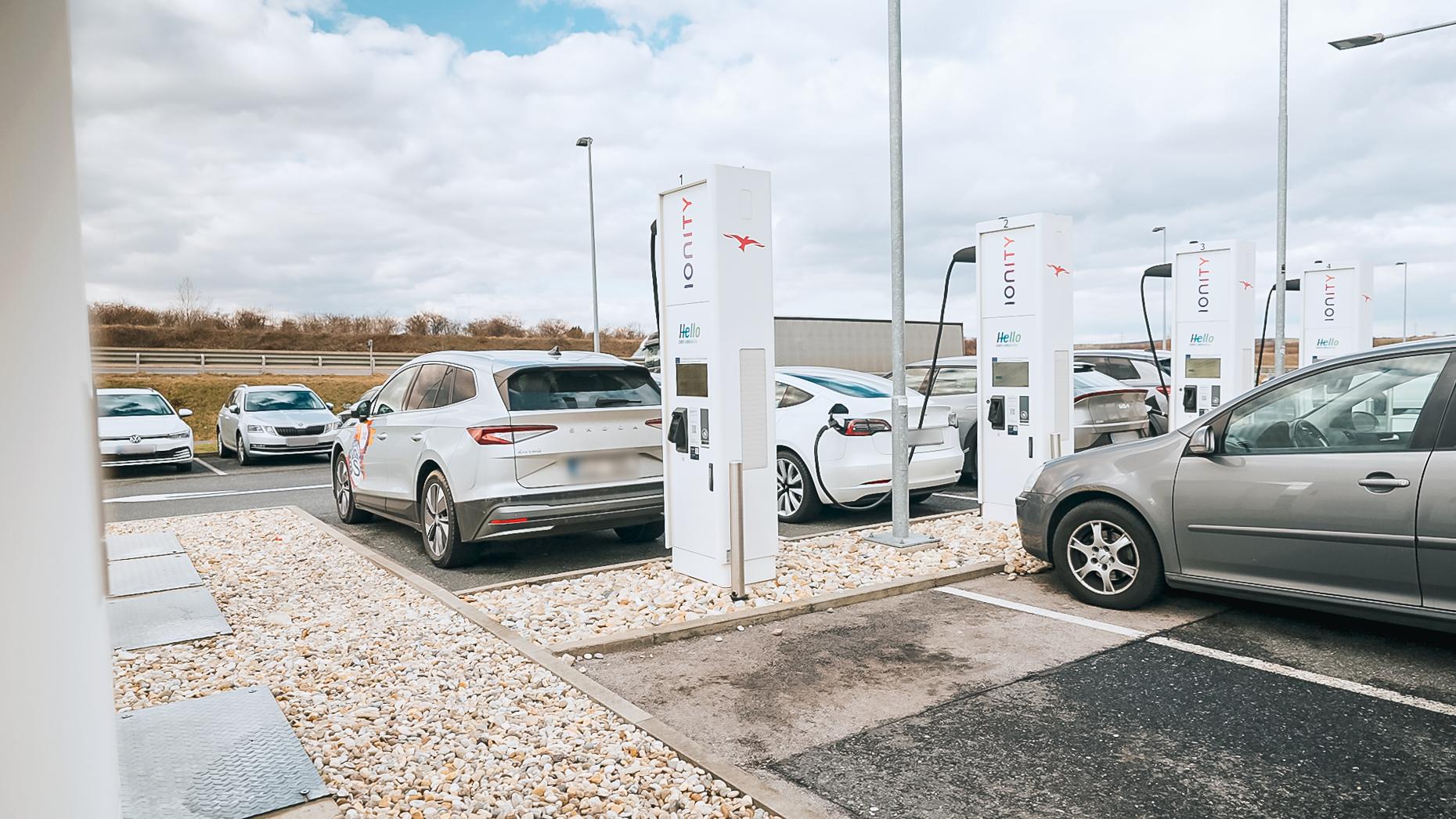
Will Charging Stations Ever Achieve Real Price Transparency and Simple Price Comparison? Here’s What We Expect!
Charging an electric car is supposed to be simple, without having to dedicate hours to discovering available tariffs and trying to compare the incomparable. You approach a charging station, and you see how much one kilowatt costs. Sounds simple, right? Why doesn’t it work that way, then? That’s what you are going to find out in this blog post.
The most important facts at a glance
Jump to the topics that interest you the most
Why Are EV Charging Prices Confusing?
Paying for EV charging can be confusing because providers use different billing models, vary their prices based on time, location, or charging speed, and rarely offer clear cost breakdowns. In addition, legal standards for how prices must be shown are still in process of implementation.
Different billing models make price comparison difficult
Charging stations use various pricing methods. While some older ones bill you by the time you’re plugged in, others do it by the number of kilowatts you consume. Plus, prices vary depending on whether you're charging with AC or DC. On top of that, most providers and charge point operators apply tariffs, each with its own pricing structure. As a result, comparing prices requires a lot of time.
Insufficient legal implementation and lack of standardisation
One of the biggest issues for a long time has been the lack of clear legal requirements for how prices should be displayed and calculated. Without a common standard, each provider does things differently – some list all charges in detail, others give only vague or incomplete information.
Prices vary depending on provider, location, time, and charging speed
Pricing can depend not only on who owns the charging station but also on when and where you charge and whether it’s AC or DC. For example, charging at an IONITY charging point with their Power tariff will cost you €0.33/kWh in France and €0.39/kWh in Germany.
It’s easy to get a blocking fee, especially with AC
When you start charging with AC, you know it’s going to take a while. So you go shopping or walking around the city, sipping a cappuccino and trying out cakes from the new bakery. Once you come back to your vehicle, the final price for charging is EUR 10 higher than expected. The reason: blocking fee. This means your vehicle has been occupying the charging point for longer than permitted. For example, Aral Pulse charges €0.15 per minute after 120 minutes on AC charging and after 45 minutes of DC charging.
No clear or consistent way of displaying prices
In many cases, you arrive at a charging point and still don’t know exactly what it will cost. Information on the station is often written in general terms (e.g., from 0.39 cents/kWh), and to see the real price in the app, you are often required to create an account first.
EV Charging vs Petrol Fuelling
When it comes to refuelling, filling up a petrol car is a much simpler process compared to charging an electric vehicle. Petrol stations are straightforward, with clear price signs and flexible payment options. In contrast, EV charging points often offer complex pricing structures and limited ways to pay.
With petrol, it goes like this:
With electric vehicles, it’s a different story:
For beginners, EV charging can feel overwhelming. Naturally, it gets much easier with time, as you learn the most common pricing structures, find your ideal provider and download a helpful app to locate charging points and pay. However, some of the system imperfections affect regular drivers as well.
Is Price Transparency More Important Than You Think?!
Lack of transparency isn’t just an inconvenience – it’s a barrier to mass adoption. Imagine if petrol stations only displayed their prices in the app. Would that be tolerated, especially by the older generations? Never. Showing clear prices is beneficial for several reasons:

Elke Galvin, Social Media and Partner Manager at go-eThe prices are not clearly visible in advance
Once, I used a DC charger that accepted my credit card but didn’t start charging. After two failed tries and a hotline call, it worked. But at no point was I informed how much it had cost me to charge there. I found out later in my banking app…
Why is Price Transparency Hard to Achieve?
If charging prices become too easy to compare, it could reduce competition, potentially increasing your charging costs. Moreover, many providers limit access to their pricing information for third parties. Additionally, pricing has been pretty confusing with no clear rules, but new regulations are starting to change that.
Furthermore, to get a fair rate, you often need a special tariff, usually only available through a website or app. So even if operators show all possible prices at the charging point, you might not be able to benefit from some of them without using the right app.
What are the Solutions for Price Transparency?
To fix the price transparency issue, there should be clear rules on how and where prices are displayed, making it easier for everyone, including elderly drivers. Charging stations should show prices in a standard way, both on-site and in apps, and operators should share pricing data with third-party apps so you can easily compare prices across different providers.
Let’s keep it simple: drivers want to know what they’ll pay before they plug in without using different apps to see prices. So, how can the industry fix this?
What improvements are being made?
The Alternative Fuels Infrastructure Regulation (AFIR) aims to improve the situation through new regulations that came into effect on 13 April 2024. The focus is on making charging stations across Europe more transparent and user-friendly.
The regulations will be monitored by the Economic Inspectorate, and non-compliance could result in fines. While these changes apply to all new stations from April 2024, older stations have until January 2027 to meet the requirements. Overall, these improvements will make charging more transparent and convenient for all users.
What is Dynamic Pricing at Public Charging Points?
Dynamic pricing at public charging points is similar to the flexible energy tariffs you may have at home, where the price changes based on demand. It is not common yet. E.ON tested dynamic pricing in 2023, where the cost to charge your car varied depending on the time of day. Tesla plans to offer such a system in the future.
This kind of pricing makes charging more sustainable. It helps spread out charging over the day, easing pressure on the grid. But if the pricing is too confusing or the price changes too often, it might lead to people charging at the wrong times, making peak demand problems worse. Additionally, during long trips, charging times aren't always within your control.
Let’s take a closer look at the issue.
What Apps and Tools Can Help Comparing Prices Today?
Apps such as Ladefuchs and Chargepoint App show prices clearly, while charging networks like Plugsurfing care about transparency as well. The issue with differently structured tariff plans, on the other hand, cannot be solved unless charging providers agree on a standardised way of pricing.
Ladefuchs App
Ladefuchs is a simple app that helps EV drivers in Germany compare prices at different charging stations. If you're looking for the cheapest ways to charge, this tool gives you an easy-to-understand overview. Interesting fact: The app is completely free and ad-free, created by e-mobility enthusiasts for the community. You can support them by making a donation or ordering some cute merch like hoodies, t-shirts, parking tickets for drivers blocking your charging spot, and more.
Interesting fact
The app is completely free and ad-free, created by e-mobility enthusiasts for the community. You can support them by making a donation or ordering some cute merch like hoodies, t-shirts, parking tickets for drivers blocking your charging spot, and more.
Pros:
Cons:
Insight:
While the Association of the Automotive Industry VDA “calls for the creation of a comparison portal for charging tariffs that offers transparency and choice for consumers”, there are apps that do exactly that. Ladefuchs is an example of such an app.
Last Mile Solutions (Chargepoint)
We are happy to see that there are companies that care a lot about transparency among our partners. Last Mile Solutions is one of them. Their Chargepoint App gives drivers access to lots of charge points across Europe with real-time info on location, prices, and availability.
Pros:
Cons:
Plugsurfing
This app unites EV drivers and CPOs. With Plugsurfing, you are able to check prices in advance and charge pretty much anywhere in Europe without needing to sign up for dozens of separate accounts.
Pros:
Cons:
Summary
The issue with price transparency in EV charging is that drivers often have no idea what they’ll pay until after they start charging or download an app. Varying pricing models, extra fees from third parties, and the potential for dynamic pricing in the future only add to the confusion.
What’s being done to improve this situation? New regulations are pushing for clearer, standardised pricing at charging stations in Europe. The changes will make the charging process more predictable and user-friendly. From 13 April 2024, all new charging stations must follow these regulations, and older stations have until 2027 to catch up.
![[Translate to Englisch:]](/fileadmin/_processed_/d/7/csm_electric-vehicle-lithium-nmc-battery-electric-car-2025-01-29-04-42-32-utc-min_0d337e19d4.jpeg "[Translate to Englisch:]")