


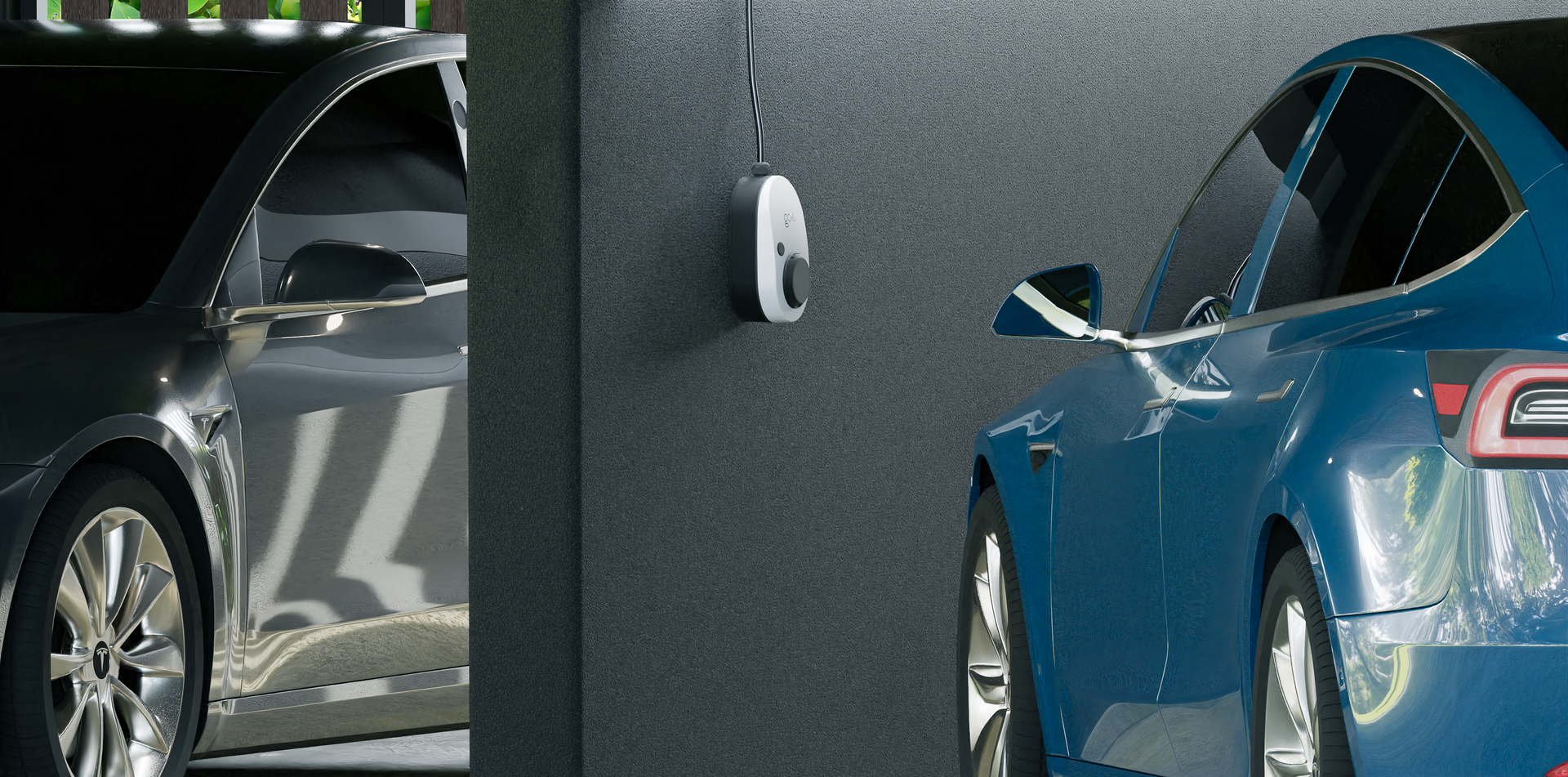
Controllable Wallbox and §14a EnWG: What You Need to Know!
When choosing a wallbox for home charging, a lot of factors play a role. But before exploring features and functionality, make sure the one you pick is controllable and meets the requirements of §14a of the Energy Industry Act (EnWG). This is vital in Germany.
In this article, we explain what makes an EV charger controllable and how you can benefit from the new regulation. By the end, you will know how to select a §14a EnWG-compliant wallbox.
Quick access to the content
What is a Controllable Wallbox?
A controllable wallbox is a smart charging station for your electric vehicle that can be managed remotely to balance the pressure on the electricity grid. It adjusts its charging speed or pauses charging when there’s a lot of electricity demand. This strategy helps prevent overloading of the power grid.
How Does a Controllable Wallbox Work?
A controllable wallbox works by connecting to the electricity grid and having its charging process adjusted based on real-time demand. This is something you as a user cannot control. When there's high energy consumption, the wallbox can automatically slow down or pause charging to help balance the load.
Under the updated Section 14a of the Energy Industry Act (EnWG), valid in Germany, effective January 1, 2024, EV chargers must be capable of reducing power output to a minimum of 4.2 kW during grid overloads. So in other words, every wallbox installed after that date must be controllable.
This regulation is a control mechanism acting as a safeguard for rather rare cases of grid overload. So there is no need to worry if you use a controllable wallbox, it doesn’t mean you will constantly experience interrupted or slowed-down charging. This could only happen in absolute emergencies.
Grid operators can control wallboxes through the following solutions:
Ripple control receiver
The ripple control receiver is the most common solution. The network operator installs a ripple control receiver in your electrical system. It acts as an intermediary between the grid and the wallbox. When needed, the operator sends a signal to reduce charging power or stop charging temporarily. This works with §14a-compliant wallboxes, limiting power to 4.2 kW. Signals can be transmitted via a cable or digitally.
Power contactor
The power contactor is a rarely used solution. If your wallbox cannot be controlled directly via a ripple control receiver or control box, a contactor interrupts the power supply in the event of an overload. This means the charging process will stop completely until it can be resumed safely.
FNN control box
The FNN control box takes place of a traditional (analogue) ripple control receiver. The control box enables more intelligent digital communication between the grid operator and your wallbox and reduces the power in case of a heavy grid overload.
Can Every Wallbox Be Used as Controllable According to §14a EnWG?
Not every wallbox meets the technical requirements to qualify as controllable in accordance with §14a EnWG. To comply with the new regulations, a charging station must have at least one digital interface.
Are all smart wallboxes 14a EnWG compatible?
Not all smart wallboxes are compatible with the requirements of §14a EnWG, but most of them are. To meet the regulation's technical specifications, the wallbox must include at least one of these features to receive control signals from the grid operator:


Ronald Kroke, Head of Marketing at go-eSection 14a EnWG only applies in Germany
It’s important to note that the §14a EnWG applies only in Germany. New wallboxes must have the required functionality. If your wallbox isn’t controllable and was installed before January 2024, you can continue using it.
Is the go-e Charger a Controllable Wallbox?
Yes, the go-e Charger is a controllable wallbox. It can work with a ripple control receiver or control box, which may reduce the charging power to balance the load on the grid. For load balancing purposes, as an example, you can further reduce the charging power within this limitation using the app or directly on the device. However, it cannot be increased beyond the set limit.
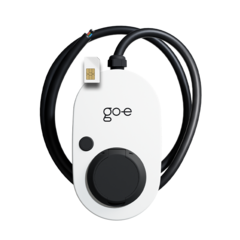
The stationary go-e Charger Gemini 2.0 comes with two data cables that can be directly wired into your electrical system. Your electrician needs to connect the potential-free output of the control box or ripple control receiver to the white and red signal wires on the go-e Charger, as outlined in the instructions. Further adjustments may be necessary in the app to complete the setup.
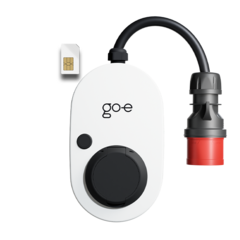
There are also ways to make our mobile wallbox go-e Charger Gemini flex 2.0 controllable. You will find them in a PDF document we have prepared for you.
Do you want to allow Integration of youtube videos?
Allows the playback of videos, that are hosted on youtube.com. By allowing this feature, you accept the privacy agreement of google.
What Does §14a EnWG Mean for Wallbox Owners?
Section 14a of the EnWG introduces both obligations and benefits for wallbox owners. The regulation primarily applies to wallboxes with an output of 4.2 kW or more, which covers most private charging stations (typically 11 kW or 22 kW).
The main points it introduces are the following:
From this short summary, you can already guess what pros and cons this new regulation brings you.
What are the Advantages of a Controllable Wallbox?
We get it — no one likes the idea of their charging being interrupted, even for a short time. But let’s look at the bigger picture. Controllable wallboxes offer some clear benefits that make them a smart investment for the future.
What are the Disadvantages of a Controllable Wallbox?
There is nothing perfect in the world, including the regulations in Germany. Even though the §14a EnWG has a lot of positive aspects, you need to be aware of the drawbacks, too.
All in all, it is not entirely bad or good for you, it’s just different.
What Compensation Models are There?
At the moment, there are two main compensation models for controllable wallboxes in Germany. You can either receive a fixed reduction in grid fees, saving around €110–190 per year or benefit from a 60% reduction in consumption costs, which requires a separate meter.
Starting in April 2025, a time-variable grid fee will also be available, offering even cheaper charging during off-peak hours when the grid is less utilised.
Read more about it in our blog about §14a EnWG.
How Much Does a Controllable Wallbox Cost?
A controllable wallbox usually means a smart wallbox that can be connected to the internet and offer features like PV surplus charging, load balancing, and more. Prices start at around €500 and reach up to €1600 or more. Our go-e Charger costs €749 - €1.149* depending on the model and the charging power.
* RPP
Summary
A controllable wallbox means your grid operator can lower your charging power during high energy demand, preventing grid overloads.
In Germany, wallboxes installed from January 1, 2024, onwards must be controllable under Section 14a of the Energy Industry Act (EnWG). All the go-e Chargers of the Gemini series as well as the new go-e Charger PRO comply with the new regulation, meaning their charging power can be adjusted according to the dynamic load on the grid.
![[Translate to Englisch:]](/fileadmin/_processed_/d/7/csm_electric-vehicle-lithium-nmc-battery-electric-car-2025-01-29-04-42-32-utc-min_0d337e19d4.jpeg "[Translate to Englisch:]")

![[Translate to Englisch:] Anzeige des Akkustands und der verbleibenden Reichweite eines Elektroautos.](/fileadmin/_processed_/4/c/csm_electric-car-battery-display-at-seventy-percent-ch-2026-01-08-02-22-18-utc_5f0ead225c.jpg "[Translate to Englisch:] Akkustand und Reichweite eines Elektroautos")