Bidirectional Charging: What's Holding It Back and When Will It Finally Arrive?
Bidirectional charging can be available to a wide audience by 2030. The technical side of development is mostly ready. Achieving compatibility between all the system components is challenging. Furthermore, clear standards and regulations for controlling bidirectional charging are missing.
Quick access to the content
What is Bidirectional Charging?
Bidirectional charging lets your electric car battery act as buffer storage, with energy flowing both ways. It can run other devices (Vehicle-to-Load), be supplied to your home to potentially power household appliances (Vehicle-to-Home) or send power back to the grid (Vehicle-to-Grid).
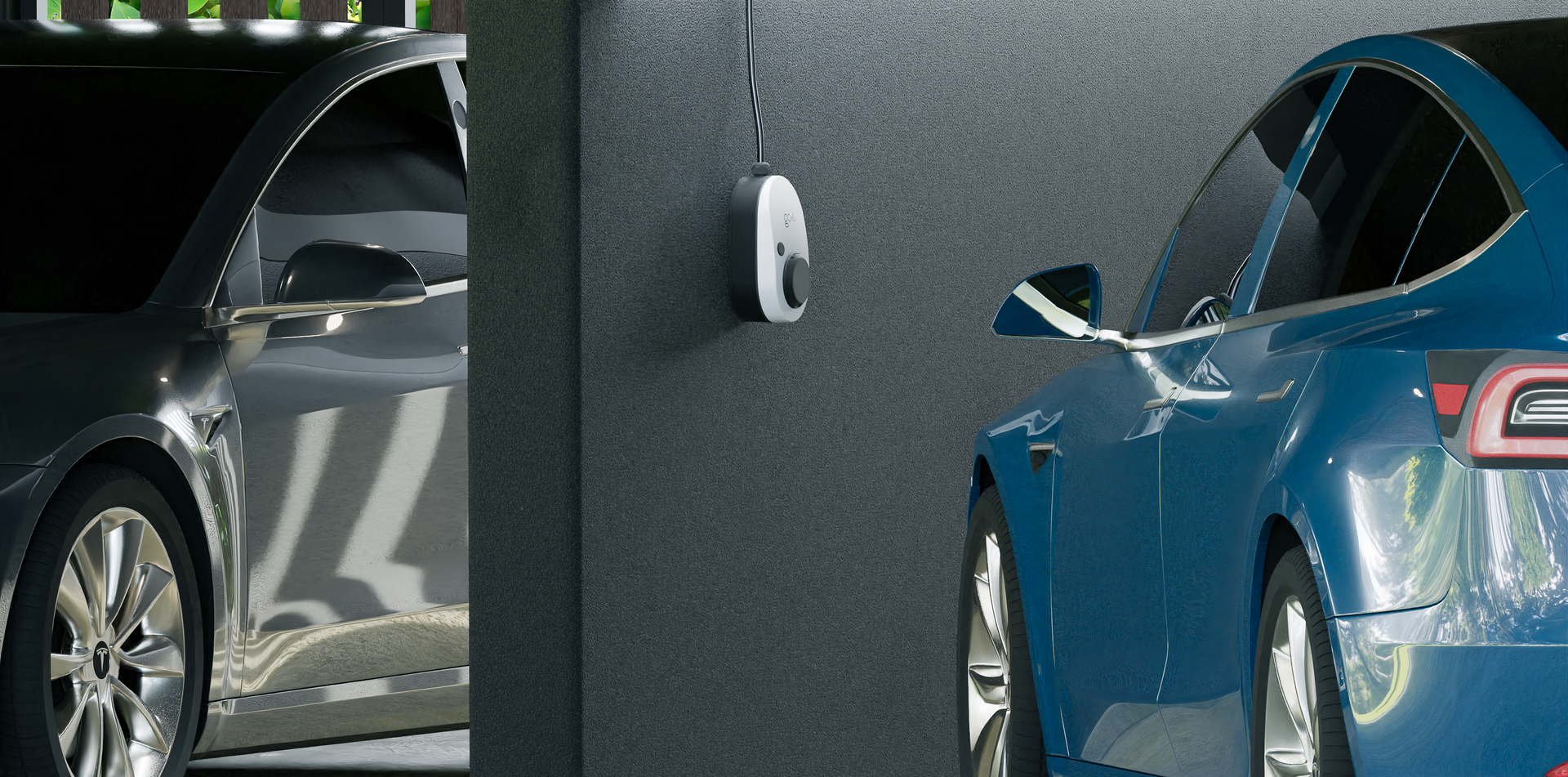
Bidirectional charging is a way to make more use of your electric car battery. Take the Tesla Model 3, with its 75 kWh battery and 629 km range. It may seem like a good investment, but if you’re not driving 500 or 600 km every day, the large battery becomes more of a burden. Even when it’s not fully charged, the extra weight consumes more energy. That’s why bidirectional charging is also called optimised charging—it enables you to use the full battery potential.
Read more: What is bidirectional charging?
What role does ISO 15118 play in bidirectional charging?
At the heart of the bidirectional charging capability lies ISO 15118, an international standard for electric car charging. This is basically a universal language that allows vehicles and charging stations to communicate with each other, no matter the brand.
This standard is what makes "Plug & Charge" possible. With Plug & Charge, you just plug in your car, and it automatically starts charging, manages payment, and verifies your info. You don’t need an app or RFID card. In addition, ISO 15118 makes it possible for electric cars to send power back to the grid when needed. The standard secures any data being exchanged, so your billing info and charging settings stay safe.
But there are some challenges. Not every electric car manufacturer and charging company uses ISO 15118 yet, so compatibility problems can still crop up. It’s especially tricky with AC charging, which is what most people use at home. AC charging needs more complicated hardware to work with bidirectional charging, making it costlier to set up. The ISO 15118 standard has been released for DC charging (ISO 15118-20) and is currently undergoing the standardisation process for AC charging.
At Which Development Stage is Bidirectional Charging Today?
Progress in bidirectional charging varies by country. While the number of vehicles and charging devices is growing, many systems rely on proprietary platforms due to a lack of regulations. DC bidirectional charging is easier to implement than AC, leading to faster development.
In 2025, at least two car manufacturers plan to equip 25% of their vehicles with bidirectional charging capabilities. Additionally, one manufacturer aims for 50% and another even targets 75%.
Germany is the world's second-largest producer of electric cars after China. The country has recently presented a roadmap for achieving indiscriminatory bidirectional V2H and V2G charging. Basically, it is about ensuring that the system works equally for all users, types of electric cars, or charging equipment. The automotive industry believes that V2H (which helps optimise personal energy use) and V2G (which lets you participate in electricity markets) will be the most beneficial for individual users and the energy system as a whole.
When it comes to V2L bidirectional charging, nowadays, you can use a standard electrical outlet in your electric car to power devices on the go. For example, if you have a Hyundai IONIQ 6, just grab the original Hyundai V2L connector and you can plug in your coffee machine while camping or charge your e-bike when you're on the road.
How does bidirectional charging development differ across European countries?
France leads in V2G with strong regulations and active projects, while Germany focuses on renewables but lags in V2G adoption. Italy, though lacking specific policies, is advancing with trials and economic incentives, readying for a broader V2G rollout.
The French car manufacturer Renault, in cooperation with the Munich-based tech company The Mobility House, has launched a vehicle-to-grid charging project in France with the new Renault 5 models and the Alpine A290. This project enables car owners to connect their vehicles to the electricity grid. By feeding electricity into the grid, they can charge and drive virtually for free as their cars allow them to earn money by selling energy back. The system requires the PowerBox Verso, a special charging station for bidirectional charging, and the Mobilize Power energy contract managed by The Mobility House.
The introduction of this V2G technology will not only take place in France but also in the UK from 2025. In the meantime, Germany is still examining how to implement it. France has a head start in rolling out this technology, mainly because the country has better regulations, more smart meters, and a single company, Enedis, managing the distribution network. Mobility House assures customers that the use of V2G will not damage their car batteries and that they can control the charging status and all the necessary settings via an app.
Italy is preparing for V2G technology with significant trials like the Fiat-Chrysler V2G Project and the DrossOne V2G Parking Project. Although there are no specific V2G policies yet, removing double taxation has improved its economic appeal, and variable energy pricing supports flexibility. With the upcoming TIDE Act in 2025, V2G will be allowed to provide flexibility services, and nearly all households now have smart meters in place, paving the way for broader V2G adoption.
The legislators and energy suppliers are not yet ready to make the bidirectional charging technology available in Austria. The lack of established standards means there’s no funding available yet, which slows down the whole progress quite a bit. However, Austria is currently in the process of establishing standards for fundable wallboxes and charging infrastructure that can communicate, which gives the country a head start. So, when V2H and V2G charging become widespread in a few years, much of today’s infrastructure should be ready for it.
Which cars are already prepared for bidirectional charging?
While many modern electric cars are prepared for V2X (Vehicle-to-Everything) capabilities, these features are not yet fully operational. So far, only a few manufacturers offer models with hardware prepared for V2H or/and V2G bidirectional charging.
Here are some of the models available on the European market that support bidirectional charging, specifically DC charging:
CUPRA Born 77 kWh - V2H
Mitsubishi i-MiEV (CHAdeMO) - V2G
Mitsubishi Outlander (CHAdeMO) - V2G
Nissan Leaf (CHAdeMO) - V2G
Nissan e-NV200 (CHAdeMO) - V2G
Skoda Enyaq 77 kWh - V2H and V2G announced
Polestar 3 - V2L, V2H and V2G announced
Volvo EX90 - V2L, V2H and V2G announced
VW ID.7 Tourer 77 kWh - V2H and V2G announced
VW ID.BUZZ 77 kWh - V2H and V2G announced
Keep in mind that only purely electric vehicles are suitable for bidirectional charging. Plug-in hybrid electric vehicles and hydrogen vehicles are not equipped for this function, primarily due to their smaller battery sizes. Therefore, for those looking to utilise V2X technology effectively, focusing on fully electric cars is key.
Bidirectional Wallboxes: Hardware Prepared, Software in Progress
New wallboxes claiming to enable power flow in both directions are constantly entering the market. Most of them are DC charging points, as DC feed-in can be activated in the vehicle via software without any additional components.
Even though the software is not available yet, it does make DC chargers one step closer to realising the power of bidirectional charging. The thing is, it’s more complicated with AC as a bidirectional onboard charger inside the car is required. What makes DC chargers less attractive though is the high cost. They are more expensive than AC chargers as they include advanced components that convert AC to DC within the charger, enabling faster charging by directly supplying power to the car battery.
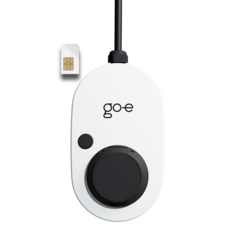
The go-e Charger PRO, is one of the AC charging stations that are V2X-ready (according to ISO 15118) on the hardware side. Once the technology allows taking the real benefit of bidirectional charging, owners of this charging device will be able to do it right away.
The following wallboxes are expected to support bidirectional charging. Note, however, that none have ISO 15118 software installed yet, as it remains in the testing phase.
AC wallboxes with V2X-ready hardware
openWB Pro 11/22 kW
Sono Wallbox 11 kW (For Sion EV only (discontinued))
SolarEdge Ladestation BIDI 22 kW (Announced)
Entratek Power Dot Fix - BIDI 22 kW
DC wallboxes with V2X-ready hardware
E3/DC Edison DC Connect 11 kW (Announced)
eaton Green Motion DC 22 kW (Announced)
Enteligent Hybrid DC Bidirectional Fast EV Charger 15/25 kW (Announced)
sun2wheel Two-way-10 kW (Announced)
Sigenergy Sigen EV DC Charging Modul 25 kW (Announced)
While the hardware of these wallboxes is already labelled as “V2X-ready,” the software required for them to perform bidirectional charging is a whole different story. Developing this software depends on having compatible vehicles, as it needs to match their exact specifications. All in all, until more cars support bidirectional charging, the software cannot be finalised.
What Challenges are Holding V2G and V2H Back?
The main challenges for V2H and V2G bidirectional AC and DC charging in Germany and Austria are related to regulatory and technical issues. For V2G, the problems arise from the fact that it involves selling electricity, which leads to various tax implications. But it’s not just V2G that has its complications — V2L and V2H have their own challenges too.
For instance, imagine this: you charge your car for free at work or at a dealership that offers complimentary charging. Then you head home and sell that electricity back to the grid OR power your dishwasher with it. Doesn’t really seem fair, right?
Austria has not reached this point yet, mainly because of its power grid. The country primarily relies on renewable energy sources. However, this mix of energy can make it harder to keep the power grid stable because energy needs to be sent in and out at different points.
Let’s take a closer look at some of the other challenges we face with this technology.
AC vs DC bidirectional charging
AC and DC bidirectional charging require different adaptations: AC uses onboard chargers but needs updates in communication, while DC requires a converter in the charger itself. Both depend on ISO 15118-20 for successful data exchange.
AC bidirectional charging:
A converter to change alternating current to direct current is not necessary within the charger, reducing costs compared to DC solutions.
Most residential chargers are AC.
➖ Adaptations are needed in the car battery management system and charging equipment.
➖ High-level communication between the charger and electric car (ISO 15118) is necessary and still being standardised.
➖ Vehicle onboard charger must be capable of converting DC to AC and meet specific network code requirements.
DC bidirectional charging:
Changes in the car onboard charger are not required.
ISO 15118-20 high-level communication is already standardised for DC.
➖ An additional converter to convert the alternating current to direct current must be integrated into the charger.
➖ Adaptations are necessary in the battery management system of a car.
Technical challenges for V2G adoption in EU countries
Country | |
Germany | Limited availability of V2G-capable vehicles and bidirectional charging infrastructure; ongoing trials face integration issues with existing grid systems. |
Austria | Austria’s domestic power grid limits progress. Unlike France, which relies on nuclear energy, Austria uses renewables like wind, solar, and primarily water. However, this energy mix challenges grid stability for input and output demands. |
France | High smart meter penetration supports V2G, but specific technical requirements for balancing services may hinder demand-side response aggregators. |
Italy | Focus on V2L/V2H use cases rather than V2G; infrastructure development for bidirectional charging is still in early stages. |
Spain | Lack of local flexibility markets limits V2G deployment; technical interoperability between charging systems and energy management is needed. |
UK | While trials are extensive, the current smart charging legislation does not fully accommodate bidirectional charging, creating regulatory and technical barriers. |
Technical aspects of AC and DC bidirectional charging in Germany and Austria
Electric vehicle manufacturers, charging station producers, operators of charging facilities, grid operators, and energy providers need to work together to provide sufficient conditions for bidirectional charging. Here are the main technical issues they need to solve.
Compatibility
Issue: Bidirectional charging will work well only if all components, such as the wallbox, PV system, vehicle, and home energy management system, are compatible. These components need to communicate effectively to share information.
Current status: Close to a solution. The ISO 15118 standard provides a basis for communication between vehicles and charging infrastructure. However, not all components are fully compatible yet.
Electrical safety
Issue: Bidirectional charging requires advanced protection mechanisms to detect faults in both directions, ensuring quick responses to irregularities. Additionally, as bidirectional charging integrates with home energy systems, further safety measures are needed to prevent overloads.
Current status: Solved for basic requirements such as ensuring that bidirectional charging complies with grid connection guidelines, like VDE-AR-N 4100 and VDE-AR-N 4105. However, more detailed safety standards, such as fault detection to protect against irregularities from both grid and vehicle sides and digital communication standards (ISO 15118 for bidirectional AC charging) are still being developed. IEC standards for AC and DC charging are expected to be revised around 2025-2026.
Vehicle battery warranty
Issue: Using bidirectional charging could potentially impact the vehicle's battery life. Manufacturers need to offer warranties that cover this, so users know exactly what to expect in terms of battery performance.
Current status: Mostly solved. Manufacturers like Volkswagen mention that bidirectional charging capabilities will not change their car warranty conditions. They do take some “safety” measures, though. Volkswagen restricts its ID. family vehicles to a minimum battery charge of 20% during DC bidirectional charging.
Note: According to Dirk Uwe Sauer, who heads the Chair of Electrochemical Energy Conversion and Storage System Technology at RWTH Aachen, bidirectional charging is not likely to shorten the lifespan of an electric car for several reasons:
A discharge rate of 3 kW is assumed to be the case for bidirectional charging. Such low power can’t have a significant impact on the battery.
A fully charged state accelerates battery ageing. Using the battery to power the house at night means reducing the time it remains fully charged.
Regulatory challenges in Germany and Austria
It’s important to establish a comprehensive legal framework to support AC and DC bidirectional charging. Fair payment options, straightforward regulations, and the tech standards needed to bring V2G into the energy system should be considered.
This includes the following aspects:
Data protection
Issue: Communication between all parties involved in bidirectional charging means that a lot of information is constantly exchanged between different sources. So you may naturally worry that your data might be misused. To address this, companies need to stick to using only the information necessary for their services. Users should always know who has access to their data and why and they should have control over sharing. The technology must meet strict security standards, like the BSI certification.
Current status: Close to a solution. ISO 15118 provides encryption standards for secure communication. To avoid fines and earn people’s trust, companies need to follow GDPR guidelines and be upfront about how they handle and protect data.
Network charges
Issue: Currently, there is a lack of clear guidelines on network charges for V2G. For bidirectional charging to be fair, it must be ensured that users aren’t paying network charges twice — once when charging their cars and again when sending energy back to the grid.
Current status: Still under discussion. Policymakers and regulatory bodies are working on creating a fair structure to avoid double-charging.
Measuring and controlling
Issue: There’s a need for clearer rules on how the digital communication between the vehicle and charging system connects to control and measurement functions. Plus, it raises the question: can an MID-compliant meter in a wallbox measure electricity flow both ways?
Current status: Solved to a certain extent. The EnWG 14a in Germany provides measurement guidelines, but the integration of digital communication with measurement systems is still under development. An MID-compliant meter in a wallbox can track both incoming and outgoing electricity. This means it is suitable for bidirectional charging setups.
Property and legal issues
Issue: For instance, in multi-family units or offices where multiple electric cars may be connected to bidirectional chargers, landlords and tenants need clear guidelines on energy metering, cost-sharing, and liability.
If several tenants share a charging station that can send energy back to the grid, it’s unclear who should benefit from any financial returns, like credits for supplying extra energy. Additionally, if the wallbox, for instance, has issues — say it malfunctions and affects the grid — there could be legal questions about who is responsible for repairs or damages.
Current status: Not clear yet. There is no comprehensive legal and tax guidance on this topic.
Green or grey electricity
Issue: What about “green” electricity? If you store solar energy temporarily in your car battery, it should still be considered green and continue to be marketed as such under the Renewable Energy Sources Act (EEG). Even if it’s temporarily stored in a facility that has some grey electricity from the grid, it’s important that its green status stays intact.
Current status: Solved to a certain extent. While provisions do exist under the Renewable Energy Sources Act (EEG), the process requires extra bureaucracy. Long story short, clear guidance is needed to streamline this process.
Note: Yet another issue: Operators of solar power systems can earn money when the electricity is sent back to the grid. However, if this electricity is stored in an electric vehicle and then sent back to the grid later, they won't receive this remuneration.
What challenges are easier to solve?
All these problems can be solved, but it’ll take some time. If all the parties involved actively work together, suitable standards can potentially be established in 2025. But that doesn’t mean everything will be ready by then.
Simpler challenges include:
Vehicle availability
The number of electric cars equipped for DC bidirectional charging is growing. Since the ISO 15118 standard for AC bidirectional charging is still not finalised, vehicles cannot claim to support it. Significant work by regulatory bodies and standardisation organisations remains to be done in this area before broader implementation can occur.
Charging devices
The market for bidirectional chargers is developing. Currently, DC bidirectional chargers are more expensive because of advanced technology and specialised components, such as high-capacity power electronics. However, as production increases and technology improves, costs are expected to drop. AC systems, on the other hand, have lower initial costs. But they may be slower and less efficient than DC chargers, which makes them less appealing to high-demand users. Ultimately, both AC and DC solutions are expected to coexist, meeting different user needs.
Battery degradation concerns
A lot of people interested in the potential of bidirectional charging worry about its impact on the vehicle battery lifespan. What could allay these concerns is more research on the long-term battery health and clear assurances from manufacturers regarding warranty coverage.
What challenges take time to solve?
The whole electrical network is like an orchestra where you cannot just add an extra player and expect him to fit in smoothly. Integrating bidirectional charging into the game means each party needs to adjust. The challenges that are expected to take the longest to overcome are the following:
Grid integration and expansion
Vehicle-to-grid bidirectional charging allows electric vehicles to send energy back to the power grid when needed, helping balance supply and demand. This flexibility can be valuable, but it also needs careful management. If too much energy flows back at the wrong time, it can overwhelm the grid — similar to what happens when there’s an excess of solar power.
That’s how bidirectional charging may introduce the need for grid expansion. To avoid this, V2G needs clear guidelines on when energy can and cannot be sent back to the grid. The issue will become particularly important when this type of bidirectional charging becomes widespread.
Regulatory and standardisation gaps
There are growing efforts to create a universal, non-discriminatory system for bidirectional charging. But regulatory and technical standards for AC and DC bidirectional charging are still being developed, with more progress made in DC.
For instance, differences in data protection regulations across countries could create uncertainty for international companies developing technologies enabling bidirectional charging. Wallbox and electric car manufacturers may face difficulties ensuring compliance with multiple legal frameworks. Consequently, this may result in higher operational costs as companies may need to invest in additional resources (e.g. legal consultations and product adaptation). On top of that, strict data protection laws in some countries could limit the ability to share necessary information such as real-time energy usage data or personal user data across borders.
Revenue models and incentives
It must be ensured that the benefits outweigh the costs and complexities associated with bidirectional charging. The whole buying and selling energy concept sounds nearly like a brilliant business idea. But what about issues like unfair pricing? Let’s imagine you charge your car battery at a public charging point and pay 80 cents per kWh. Later, you sell it to the grid at home and earn only 40 cents per kWh from your energy supplier. Not a dream scenario, right?
If users find that the financial and operational burdens (e.g. installation costs and regulatory hurdles) are less than the positive outcomes (e.g. lower electricity bills and revenue from selling energy), they are more likely to adopt bidirectional charging.
Tax implications
The introduction of bidirectional charging could lead to new tax considerations. This is particularly important when it comes to selling energy back to the grid. Nobody wants to pay twice — first for buying energy from the grid and then for selling it. To avoid double taxation, we need a clear legal framework that states that temporarily stored electricity is exempt from additional taxes, levies, and duties. Electricity should only be taxed at the point of final consumption and not at several stages of the energy life cycle.
Does the Government Offer Support?
In Austria, there are currently no specific funding opportunities provided for bidirectional charging technologies. The main problem is the lack of established regulations or standards that are prerequisites for financial support from the government. Philipp Wieser from AustriaTech mentioned that while there are already standards for wallboxes and charging infrastructure that could receive funding, the lack of rules for V2H and V2G technologies is holding things back.
The federal government in Germany wants to improve the electricity tax rules. They are trying to make the energy market more flexible — hence the introduction of the "Modernisation and cutting red tape in electricity and energy tax law." The government wants to make sure electric car drivers aren't unfairly taxed for using bidirectional charging. This means they won’t be treated like energy suppliers and won’t have to pay extra taxes.
When Will Bidirectional Charging Become Available to Everyone?
A model from the Research Center for Energy Economics in Munich predicts that by 2030, over a third of electric vehicles will use bidirectional charging. Wallbox, electric car, and energy management system manufacturers must now introduce mutually compatible products at economical prices.
Setting up bidirectional charging sounds simple from a technical standpoint, but if everyone starts making changes without coordinating, things could get messy fast. That’s why things like the roadmap by the advisory board of the German National Control Center for Charging Infrastructure are important for sorting out all the plans. According to the roadmap, by 2030, bidirectional charging should be available for all use cases and work smoothly for users across different platforms. Expect the first market-ready Vehicle-to-Home applications to hit the market by 2025. Vehicle-to-Grid applications are coming a bit later. From 2028 onwards, we will probably see a rollout of interoperable and standardised solutions for both V2H and V2G, as long as the necessary standards and regulations are in place by then.
Are There Alternatives to Bidirectional Charging?
Yes. Using a smart wallbox like the go-e Charger for charging your electric car helps to reduce pressure on the power grid. It monitors the amount of energy available and adjusts charging power accordingly. You simply need to activate a corresponding feature in the app.
First, let’s talk about how bidirectional charging helps to improve grid stability. Grid operators can reduce charging power when there's a heavy load and even send a bit of electricity back from electric cars to cushion peak demands. This might make charging take a bit longer — like three hours instead of one — but drivers won’t notice in the morning. With more renewables like wind and solar, the power grid needs to be more flexible.
Our smart go-e Charger does a very similar thing. It has features like peak shaving*, which limits charging during high demand, helping to balance the load and reduce the stress on the grid. If you charge at night, you won’t notice any difference in the morning!
* Possible when the go-e Charger is connected to the go-e Controller or any other EMS
- Bidirectional Charging
- Future Charging Technologies